
 Emergency C-section saves newborn gorilla at Seattle zoo with help from veterinary and human medical team
KillBait - News highlights delivered clearly and responsibly—no clickbait, no sensationalism
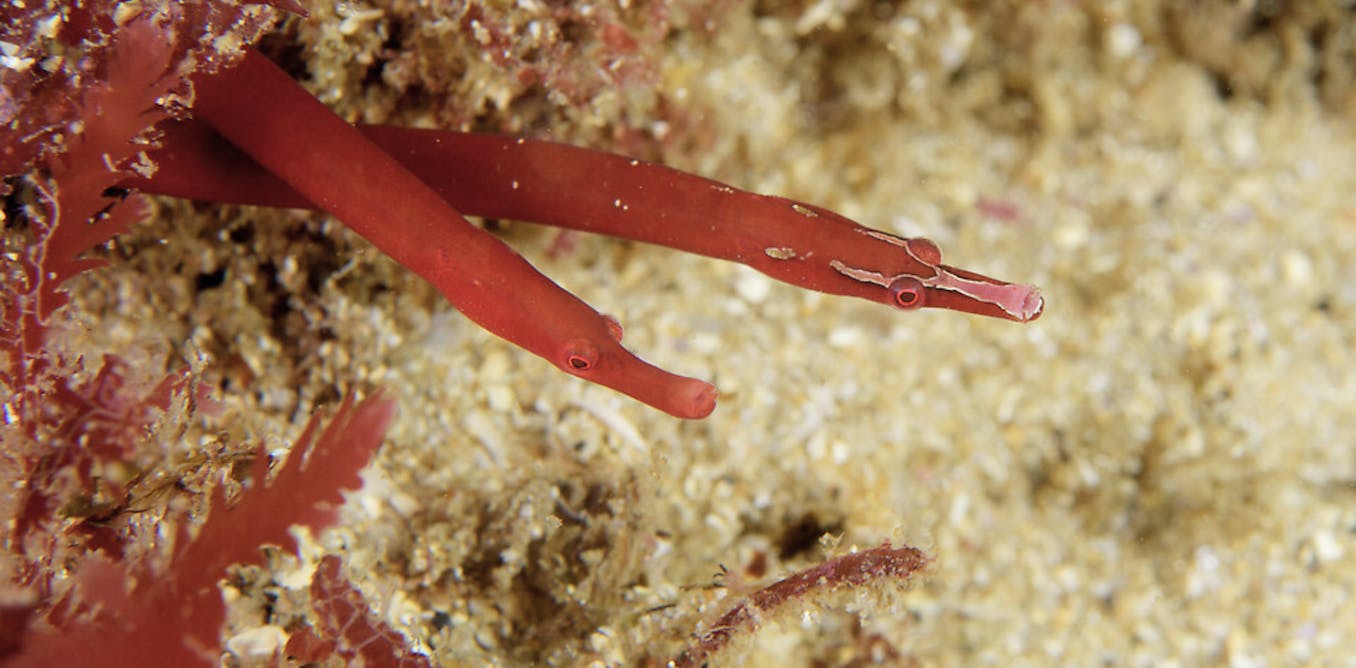
Photo: The Conversation
2026-05-29 05:18 Science 14 


Rare trunk-brooding red pipefish confirmed in Sydney waters after eggs observed on male specimen
A rare observation in Sydney’s Gamay (Botany Bay) has confirmed key aspects of the biology of the red pipefish (Notiocampus ruber), an elusive relative of seahorses and seadragons found only in Australia.
Despite its distribution across southern Australia, from Western Australia to New South Wales, the species is extremely difficult to spot due to its slender body and exceptional camouflage among red algae and rocky reef environments.Until recently, only a single wild photograph of the species had ever been recorded.
During dives at popular sites such as The Leap and The Steps at Kurnell, a researcher regularly documenting local marine life first encountered a red pipefish in April 2021.Over the following months, the individual was observed almost weekly, with sightings continuing until January 2022.In November 2021, three individuals were recorded together, including a male carrying eggs.This discovery resolves a long-standing scientific question about how the species reproduces.While many pipefish and all seahorses are known for male pregnancy, they differ in how eggs are carried.Some are tail brooders, while others are trunk brooders.
Previous assumptions dating back to 1979 suggested the red pipefish might be a tail brooder, based on its anatomy, but no living evidence had confirmed this.The new photographs clearly show the male carrying large eggs attached directly to its underside, confirming that the species is a trunk brooder.This places it within an older evolutionary group of pipefishes that lack specialised egg-carrying pouches.
The finding also suggests a surprising evolutionary link to distant pipefish species found as far away as the North Atlantic, despite the vast geographical separation.
The discovery highlights that even heavily dived and studied coastal waters can still reveal important biological insights, underscoring how much remains unknown about marine biodiversity in Australian ecosystems.
Full reading at The Conversation
2258
Original title: Rare male red pipefish carrying eggs on its trunk spotted in Sydney
The AI system has determined that this news is not clickbait/sensationalist: : The original title is factual and descriptive, clearly stating the subject (a rare red pipefish carrying eggs) and location (Sydney) without exaggeration, emotional manipulation, or sensational wording. This has coincided with the opinion of the majority of users.
You may also be interested in...
Emergency C-section saves newborn gorilla at Seattle zoo with help from veterinary and human medical team
 Blue Origin's New Glenn rocket explodes on pad during hotfire test; company to rebuild
 Australian farmers prepare for possible El Niño conditions amid growing climate change impacts