
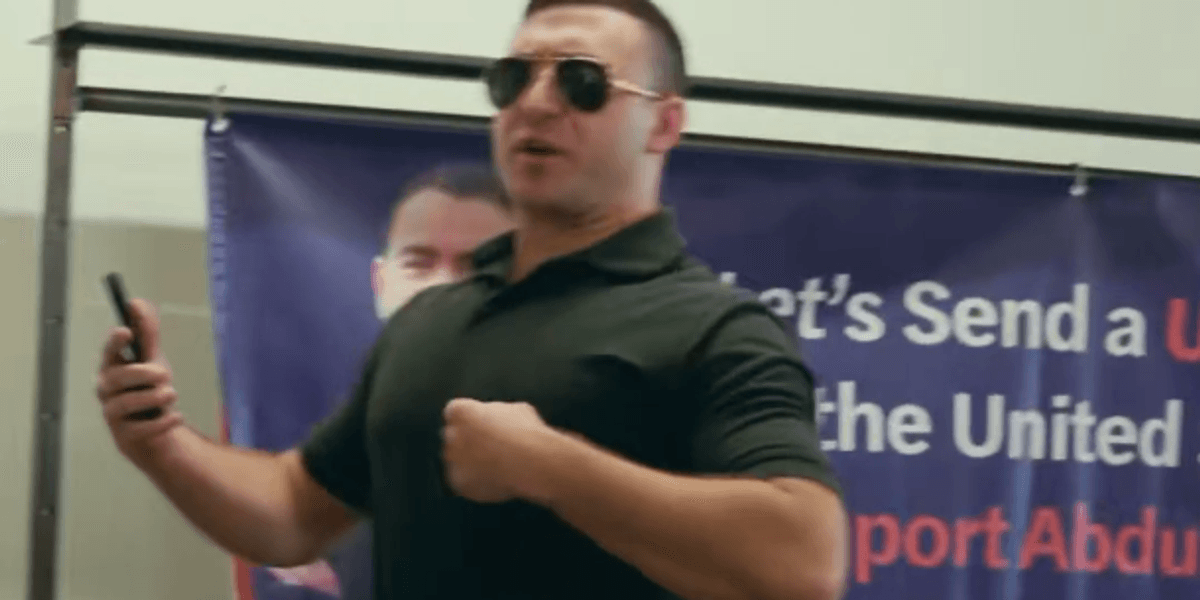
 Pardoned January 6 Rioter Humiliated After Failed Attempt to Crash Democratic Campaign Event
KillBait - News highlights delivered clearly and responsibly—no clickbait, no sensationalism
Photo: Raw Story - Celebrating 20 Years of Independent Journalism
2026-07-18 22:47 Politics 12


Republicans Target Disinformation Researchers Amid Political Tensions
The article discusses how political figures, particularly within the Republican Party, are increasingly focusing on disinformation researchers as part of broader efforts to combat perceived threats to their narratives.
It highlights concerns about the role of misinformation in shaping public opinion and the potential for partisan agendas to influence research priorities.The piece also touches on the challenges faced by researchers who aim to study disinformation without being accused of bias or political alignment.
While some experts argue that addressing disinformation is crucial for democratic discourse, critics warn against allowing political motivations to distort academic integrity.
The article underscores the complex interplay between politics, media literacy, and scientific inquiry in an era where information spreads rapidly through digital platforms.
It also mentions specific instances where researchers have faced scrutiny or backlash for their work, raising questions about the balance between free speech and accountability in public discourse.Overall, the piece serves as a critical examination of how political strategies intersect with efforts to understand and mitigate disinformation.
Full reading at Raw Story - Celebrating 20 Years of Independent Journalism
2224
Original title: Trump official busted on Epstein again after ‘forgotten photo archive’ unearthed: report
The AI system has determined that this news is clickbait/sensationalist: : The original title uses hyperbolic language ('have...in their crosshairs') to create sensationalism, aiming to attract clicks by implying a direct confrontation between Republicans and disinformation researchers. This has coincided with the opinion of the majority of users.
You may also be interested in...
Pardoned January 6 Rioter Humiliated After Failed Attempt to Crash Democratic Campaign Event
 Texas Attorney General Ken Paxton Lies About Crowd Size at Campaign Event
 White House Reportedly Investigates Whether Officials Used Insider Information on Prediction Markets