
 Sea cucumber tissue survives independently for years, revealing unusual regenerative behavior
KillBait - News highlights delivered clearly and responsibly—no clickbait, no sensationalism
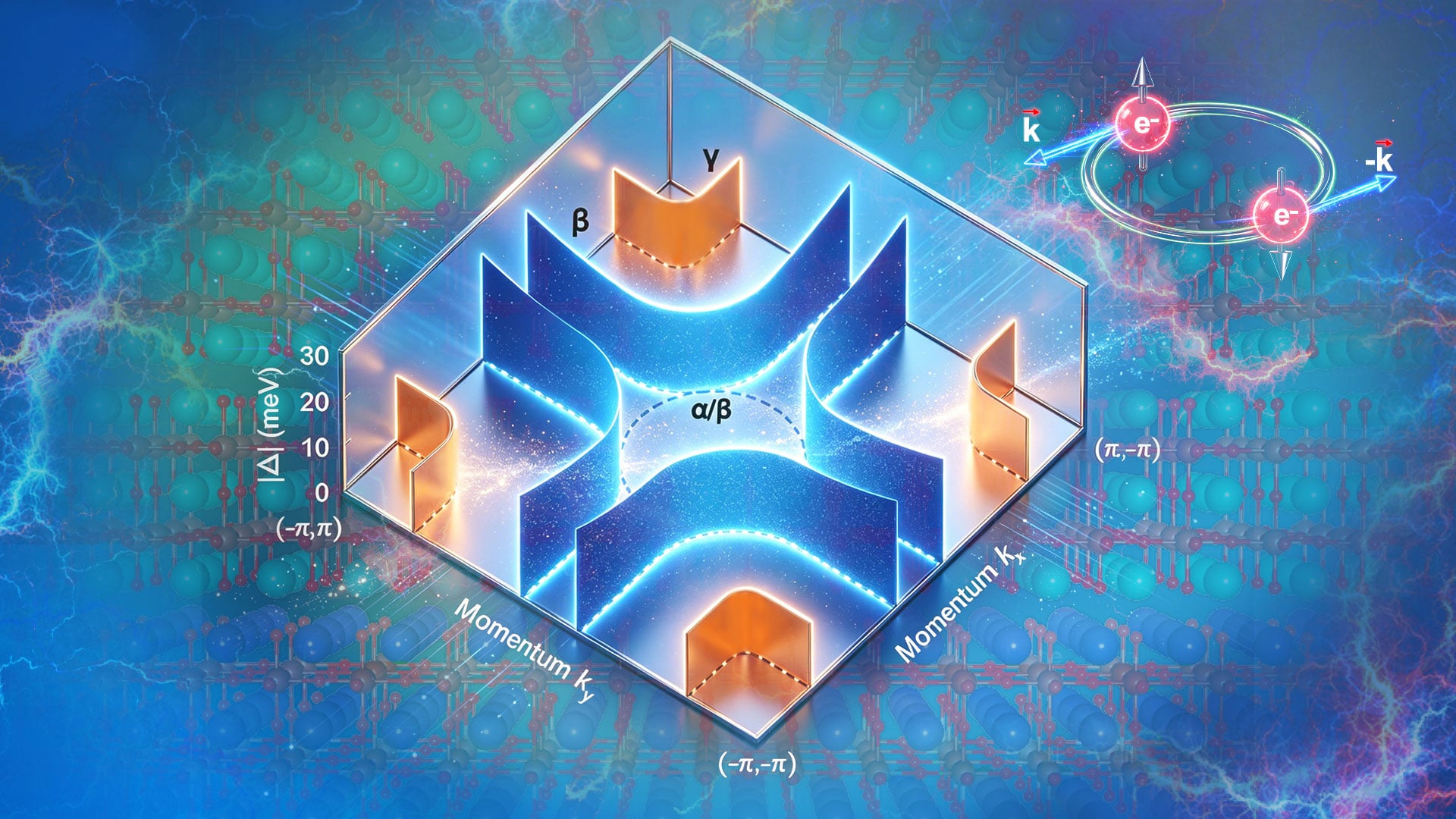
Photo: SciTechDaily
2026-05-25 03:01 Science 12 


Researchers Identify Superconducting Gap and Electron Coupling in Nickelate Superconductors
Researchers in China have made a significant advance in understanding high-temperature superconductivity by studying nickelate materials, one of the newest families of superconductors.
The study focused on Ruddlesden-Popper bilayer nickelate thin films and aimed to address two long-standing questions in condensed matter physics: the symmetry of the superconducting gap and the mechanism that enables electron pairing.
Using angle-resolved photoemission spectroscopy (ARPES), the team observed that the superconducting gap in these nickelate films is nodeless, meaning there are no points in momentum space where the gap goes to zero.
This finding is consistent with an s-wave–like symmetry, specifically an s± configuration, which helps narrow down possible theoretical models for how superconductivity arises in these materials.In addition to the gap structure, the researchers also identified evidence of electron-boson coupling.
They detected a characteristic dispersion “kink” approximately 70 meV below the Fermi level, which is widely interpreted as a signature of interactions between electrons and bosonic excitations.This observation provides important clues about how electron pairing might occur in high-temperature superconductors.
The work was a collaboration between teams at the University of Science and Technology of China and the Southern University of Science and Technology.One group specialized in growing high-quality nickelate thin films, while the other performed the advanced electronic structure measurements.
The researchers also developed a specialized cryogenic transfer technique to prevent oxygen loss during sample transport, enabling reliable experiments across institutions.
Overall, the findings offer new experimental evidence that helps clarify both the symmetry of the superconducting state and the possible pairing mechanism in nickelate superconductors.
This progress brings scientists closer to understanding high-temperature superconductivity, a major unsolved problem in modern physics with implications for future energy and electronic technologies.
2224
Original title: Scientists Crack Key Mystery Behind High-Temperature Superconductors
The AI system has determined that this news is not clickbait/sensationalist: : The original title is attention-grabbing but accurately reflects a scientific advance and does not exaggerate or mislead beyond the content of the article, so it is not considered strongly clickbait. This has coincided with the opinion of the majority of users.
You may also be interested in...
Sea cucumber tissue survives independently for years, revealing unusual regenerative behavior
 Australian researchers train brain cells to play Doom