
 Citizen scientists and social media help identify a newly recorded parasitoid wasp in Japan
KillBait - News highlights delivered clearly and responsibly—no clickbait, no sensationalism
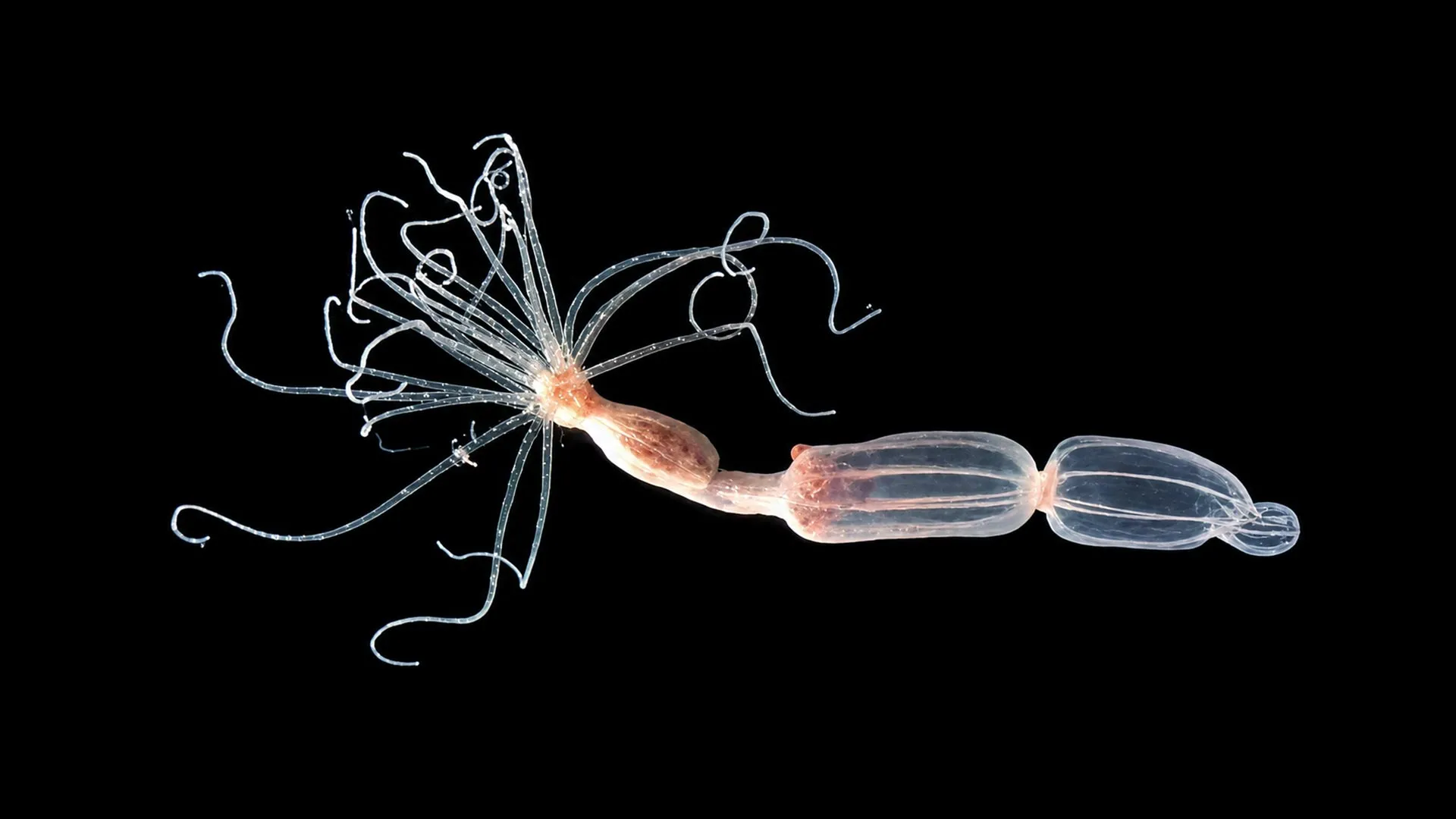
Photo: ScienceDaily
2026-07-04 02:15 Science 12 


Sea anemone study reveals alternative antiviral immune system and new evolutionary strategies
Researchers have identified an unexpected antiviral defense mechanism in sea anemones that differs fundamentally from the immune strategies observed in humans and other vertebrates.
The study focuses on a protein named CARDIB, discovered in sea anemones, which closely resembles the human antiviral protein MAVS but functions in the opposite way.While MAVS activates antiviral defenses in humans, CARDIB acts as a suppressor under normal conditions.Surprisingly, this suppression is not harmful; instead, it is essential for mounting an effective immune response against viral infections.To investigate its role, scientists used CRISPR gene editing to remove the CARDIB gene from sea anemones.The results showed that animals lacking this protein became significantly more vulnerable to viral infections.Viral replication increased, immune responses were weakened, and overall resistance to disease dropped sharply.
This counterintuitive finding suggested that the immune system of these ancient marine animals relies on a finely balanced regulatory mechanism rather than simple activation pathways.
Further experiments conducted in natural-like marine mesocosms confirmed that the CARDIB-based pathway is crucial in real environmental conditions, not just laboratory settings.Sea anemones without CARDIB accumulated more viruses and struggled to cope with naturally occurring microbial challenges.
Additional immune-related genes also showed varying levels of importance depending on environmental context, highlighting the complexity of their defense system.The findings suggest that antiviral immunity did not evolve from a single ancestral system shared across all animals.
Instead, different species may have independently developed distinct molecular strategies to fight viruses over hundreds of millions of years of evolution.
Sea anemones, which diverged from the lineage leading to humans over 600 million years ago, provide evidence that evolution has produced multiple successful immune solutions rather than one universal model.
This discovery broadens scientific understanding of immune system evolution and underscores the importance of studying diverse and ancient organisms to uncover hidden biological mechanisms.
2224
Original title: Scientists discover a completely different way to fight viruses
The AI system has determined that this news is not clickbait/sensationalist: : The original title is descriptive and accurately reflects the scientific discovery without exaggeration or sensational wording. This has coincided with the opinion of the majority of users.
You may also be interested in...
Citizen scientists and social media help identify a newly recorded parasitoid wasp in Japan
 Tornado Warning for Chatham-Kent – Rondeau Park in Ontario
 Federal Officials Declare Trump's July 4 Celebration 'Well-Prepared' Amid Heat Wave and Hospitalizations