
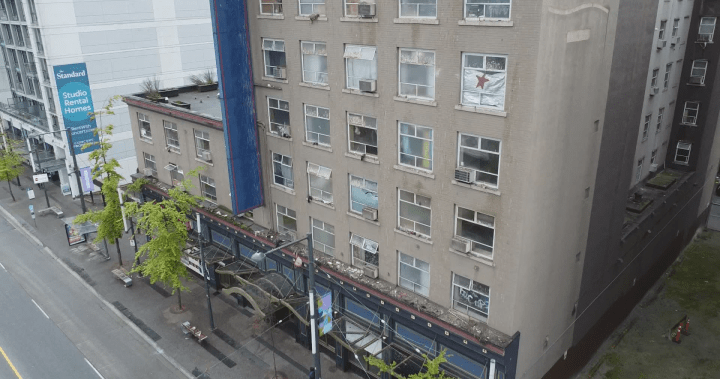
 Three residents still living in Granville SRO after end-of-June relocation deadline
KillBait - News highlights delivered clearly and responsibly—no clickbait, no sensationalism
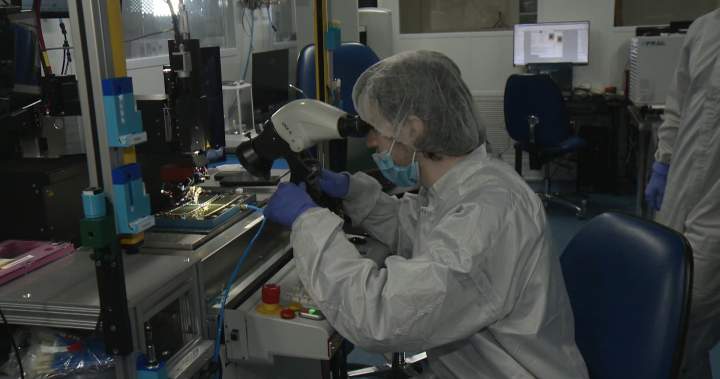
Photo: Global News
2026-07-02 12:15 Science 10 


SFU researchers contribute to major CERN particle physics upgrade project
Researchers at Simon Fraser University (SFU) in Burnaby, British Columbia, are participating in a major international scientific collaboration centred on the Large Hadron Collider (LHC) at CERN, located on the France–Switzerland border.
The LHC, which is home to the ATLAS experiment famously associated with the discovery of the Higgs boson in 2012, has recently undergone a shutdown phase on June 29 as part of preparations for a significant upgrade.
When it resumes operations in 2030, the ATLAS detector will include newly assembled components manufactured in British Columbia, marking an important contribution from Canadian scientists and engineers.
The upgrade is part of the High-Luminosity Large Hadron Collider (HL-LHC) project, designed to greatly increase the number of particle collisions and improve the precision of measurements.
One of the key components being produced is a set of detector elements referred to as “petals,” which are used to record data from billions of particle collisions.Approximately 400 of these petals are being manufactured globally, with the SFU team responsible for producing around 100 over the next three years.
These improvements aim to enhance the detector’s ability to identify rare particle interactions and potentially uncover new physics beyond the Standard Model.
SFU physicists, including Professor Bernd Stelzer and adjunct professor Luise Poley of TRIUMF, emphasise the scientific significance of the project, noting that higher precision could improve the chances of discovering unknown particles, including potential candidates for dark matter.The collaboration involves dozens of countries, reflecting the global nature of modern particle physics research.Canadian participation, particularly through SFU and TRIUMF, highlights the country’s role in advancing frontier science.
The upgraded ATLAS experiment is expected to provide unprecedented insight into the fundamental structure of the universe once it becomes operational later in the decade.
2186
Original title: SFU researchers to be part of historical international scientific effort
The AI system has determined that this news is not clickbait/sensationalist: : The original title is straightforward and descriptive, clearly stating the involvement of SFU researchers in an international scientific effort without sensationalism or exaggerated claims. This has coincided with the opinion of the majority of users.
You may also be interested in...
Three residents still living in Granville SRO after end-of-June relocation deadline
 Deadly Russian missile and drone barrage hits Kyiv, leaving at least 13 dead
 Poilievre criticizes Carney’s economic record, calling public perception an ‘illusion’