
 Stefan Falke Uses Handheld Mirrors to Reimagine New York Street Photography
KillBait - News highlights delivered clearly and responsibly—no clickbait, no sensationalism
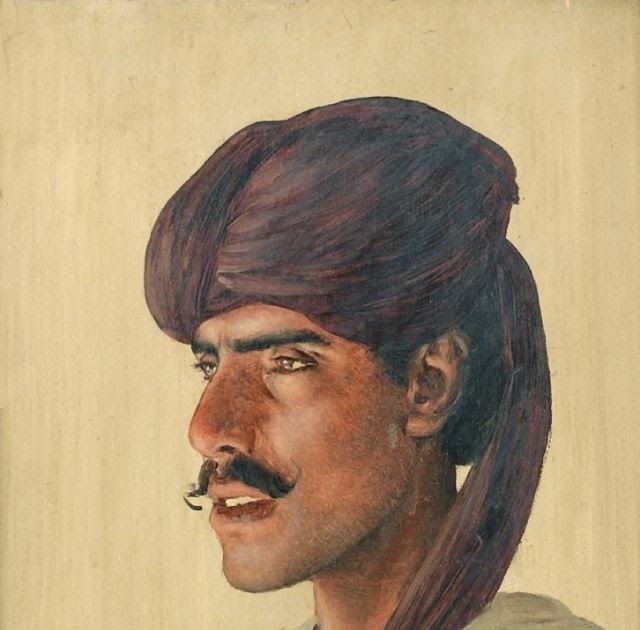
Photo: vintag.es
2026-06-10 12:44 Culture 12 


The Portrait Art of Rudolf Swoboda and His Depictions of India and the Middle East
This article highlights the work and legacy of Austrian painter Rudolf Swoboda (1859–1914), often known as Rudolf Swoboda the Younger.Educated at the Vienna Academy of Fine Arts, Swoboda became internationally recognized after Queen Victoria commissioned him to paint subjects from India following her Golden Jubilee in 1887.
The assignment led him to travel extensively across India, where he produced numerous portraits of local people, including soldiers, musicians, religious figures, community leaders, and ordinary citizens.The article emphasizes that Swoboda's paintings differed from many Orientalist works of the late nineteenth century.Rather than relying on exaggerated or exoticized portrayals, he focused on realism, individuality, and human dignity.His portraits are noted for their rich colors, careful attention to detail, and empathetic representation of his sitters.
Through these works, he documented a wide range of people from different regions, cultures, and social backgrounds across India and parts of the Middle East.
The piece presents a gallery of Swoboda's portraits, featuring figures such as Ahmad Khan Ala Yar, Abdul Karim, Pratap Singh, Muhammad Hussain, Ali Muhammad Khan, Kishan Singh, Radha Bullabh, and many others.It also includes portraits from outside India, such as a young weaver from Nicosia and a girl from Damascus.Collectively, these paintings demonstrate Swoboda's skill in capturing character, expression, and cultural identity.
The article concludes that his respectful and lifelike portrayals secured his reputation as one of the most accomplished Austrian Orientalist painters of his era.
2226
Original title: Rudolf Swoboda: Master of Orientalist Portraiture
The AI system has determined that this news is not clickbait/sensationalist: : The title accurately describes the subject of the article and does not use sensational, misleading, or exaggerated language to attract clicks. This has coincided with the opinion of the majority of users.
You may also be interested in...
Stefan Falke Uses Handheld Mirrors to Reimagine New York Street Photography
 Michelle Phillips’ Career Reinvention in the 1970s: Acting, Music, and Hollywood Fame
 A Retrospective of Henri Gray's Belle Époque Posters and Contributions to French Graphic Art