
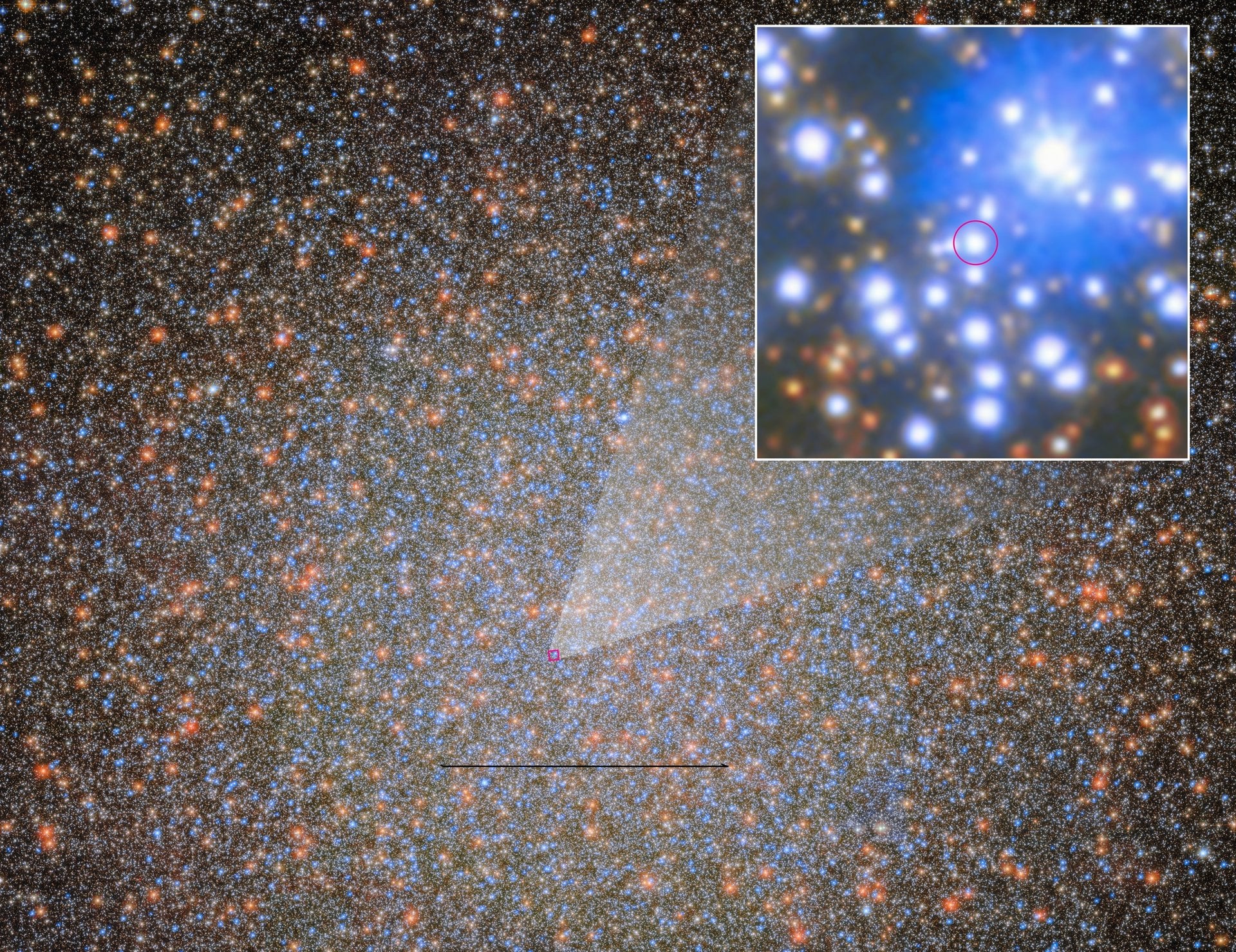
 Astronomers Discover First Stellar-Mass Black Hole in Omega Centauri Cluster
KillBait - News highlights delivered clearly and responsibly—no clickbait, no sensationalism

Photo: Quanta Magazine
2026-07-25 01:39 Astronomy 10


Type Ia Supernovae as Standard Candles in Cosmology
The text explains how astronomers measure cosmic distances using parallax for nearby objects but must switch to alternative methods like 'standard candles' for distant galaxies.Type Ia supernovae, which occur when white dwarf stars exceed Chandrasekhar's limit (1.4 solar masses), are highlighted as uniform luminous events due to their thermonuclear explosion mechanisms.These explosions release energy equivalent to billions of suns, making them visible across vast intergalactic distances.
The discussion emphasizes the role of quantum mechanical pressure (electron degeneracy) in stabilizing white dwarfs and the catastrophic collapse that triggers supernovae.This method has been critical for studying cosmic expansion rates and dark energy.While parallax works within the Milky Way, standard candles like Type Ia supernovae allow measurements to billions of light-years away.
The text also notes minor variations in explosion energies due to factors like stellar rotation or material transfer, but overall consistency makes them reliable tools for cosmological distance calculations.
Full reading at Quanta Magazine
2189
Original title: How Fast Is the Universe Really Expanding?
The AI system has determined that this news is not clickbait/sensationalist: : The original title is not clickbait; it directly references the scientific topic of Type Ia supernovae and their role in measuring cosmic distances, which aligns with the content. This has coincided with the opinion of the majority of users.
You may also be interested in...
Astronomers Discover First Stellar-Mass Black Hole in Omega Centauri Cluster
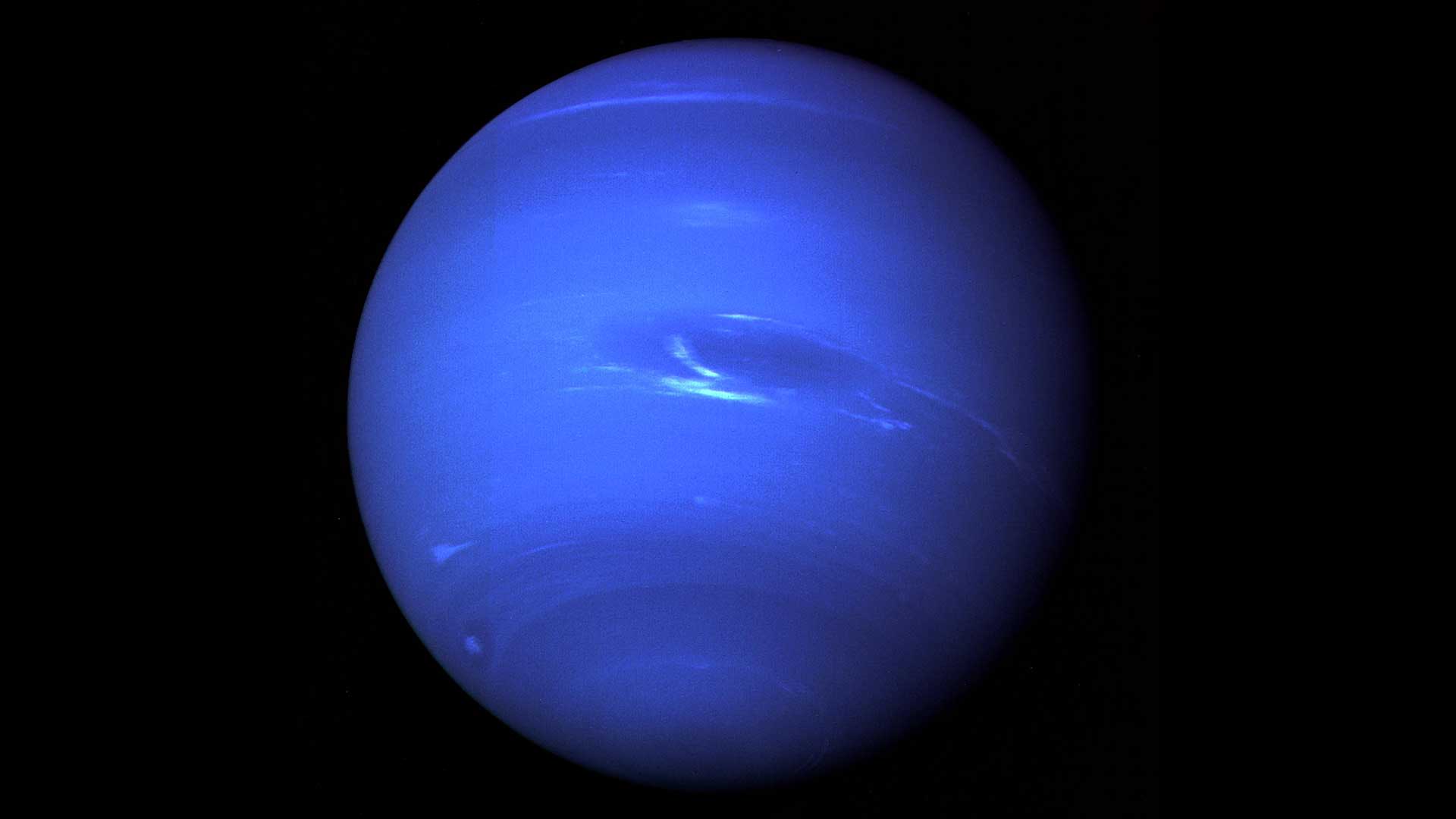 Why Neptune Has the Fastest Winds in the Solar System
 Rare helium nova reveals mysterious gas bullets from exploding star