
 ACT-Wazalendo and CCM Commit to Political Reconciliation for Zanzibar's Development
KillBait - News highlights delivered clearly and responsibly—no clickbait, no sensationalism
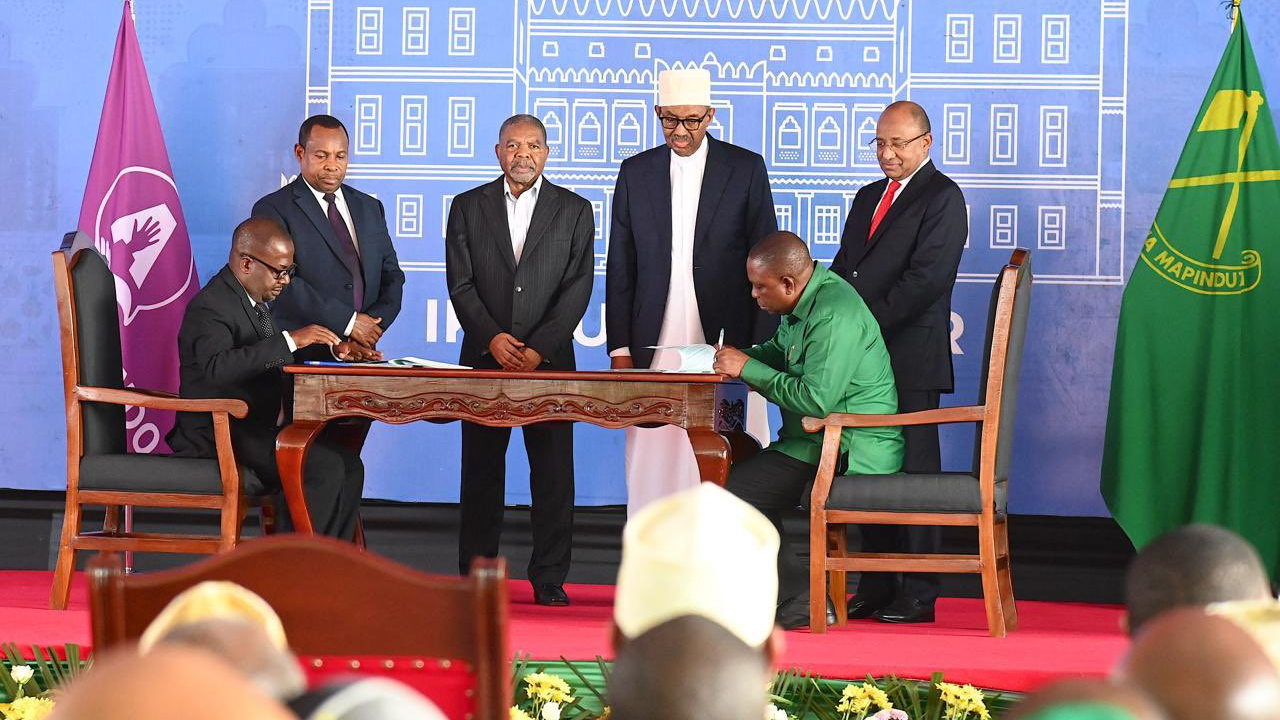
Photo: The Chanzo Inititative
2026-07-10 11:16 Politics 10


Zanzibar's New Reconciliation Accord and Political Dynamics
The article discusses the recent signing of a new reconciliation accord between Zanzibar's ruling party, CCM, and the opposition ACT Wazalendo, dubbed 'Tamko la Pamoja' (Joint Accord).
It highlights the historical context of previous reconciliation agreements like Muafaka I (1999) and Maridhiano (2010), which aimed to reduce political tensions and institutionalize power-sharing.
However, the article critiques these agreements for often being superficial, failing to address deeper structural issues like electoral reforms and democratic accountability.
The 2026 accord, signed after eight months of negotiations, is seen as another attempt to stabilize political relations, but concerns remain about its effectiveness.
The piece emphasizes that while reconciliation efforts are crucial, they must move beyond elite pacts to create genuine societal benefits and sustainable governance reforms.
The article also notes the symbolic role of President Samia Suluhu Hassan's presence at the signing and questions whether Zanzibar's reconciliation model can serve as a blueprint for mainland Tanzania's political challenges.
Full reading at The Chanzo Inititative
2186
Original title: Zanzibar’s New Maridhiano – Peace Pact or Managed Accommodation?
The AI system has determined that this news is clickbait/sensationalist: : The original title uses provocative phrasing ('Peace Pact or Managed Accommodation') to generate interest, implying controversy or hidden motives, which aligns with clickbait tactics. This has coincided with the opinion of the majority of users.
You may also be interested in...
ACT-Wazalendo and CCM Commit to Political Reconciliation for Zanzibar's Development
 Zanzibar's Rival Parties Sign Reconciliation Accord to Promote Unity and Peace
 Kenya's Political and Economic Challenges Amid Protests