
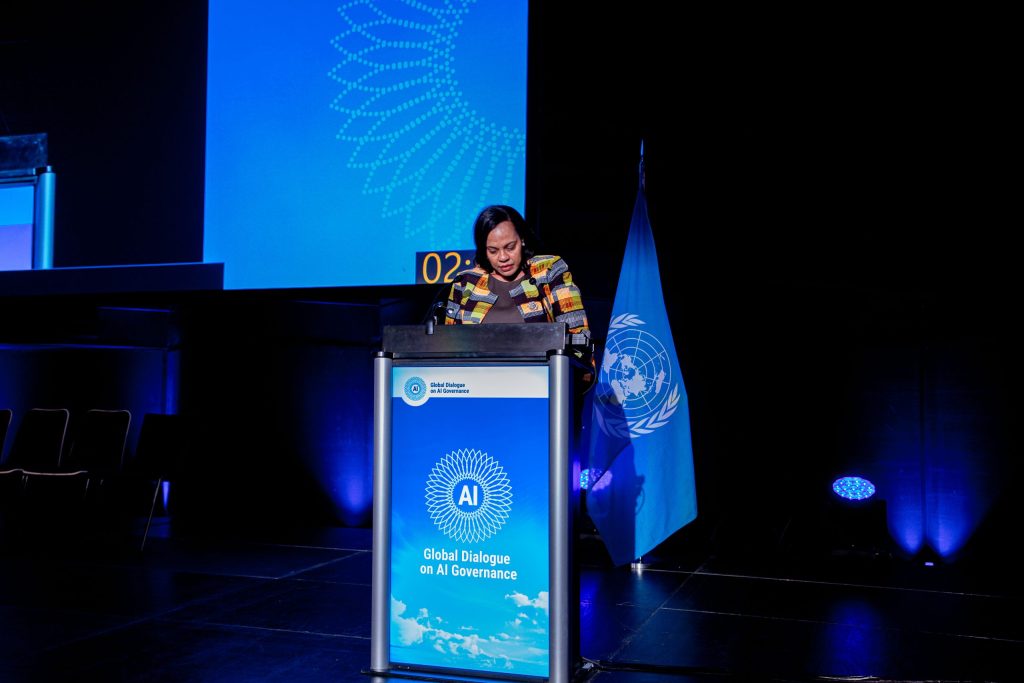
 Tanzania Advocates for Inclusive Global AI Governance Frameworks
KillBait - News highlights delivered clearly and responsibly—no clickbait, no sensationalism

Photo: Tanzania Insight
2026-07-07 13:49 Artificial intelligence 10


58 Students Face Consequences for Academic Dishonesty Involving ChatGPT
Fifty-eight students have had their examination results nullified after being found guilty of academic dishonesty, including the unauthorized use of ChatGPT, in a move that highlights growing concerns about artificial intelligence misuse in educational settings.
Educational authorities have taken decisive action against academic misconduct by invalidating the results of 58 students who were caught engaging in fraudulent examination practices.
Among the violations detected was the improper use of ChatGPT, the popular artificial intelligence chatbot that has become a focal point of debate in academic institutions worldwide.The announcement comes as schools and universities globally grapple with the challenges posed by rapidly advancing AI technology.
ChatGPT, developed by OpenAI and launched in late 2022, has emerged as both a powerful educational tool and a potential avenue for academic dishonesty.
The platform’s ability to generate essays, solve complex problems, and provide detailed answers to examination questions has forced educational bodies to reassess their assessment methods and integrity policies.
While specific details about the affected institution or examination level were not immediately disclosed, the decision to nullify results represents a firm stance against the growing trend of technology-enabled cheating.
Educational experts have noted that the use of AI tools like ChatGPT during examinations fundamentally undermines the assessment process and fails to accurately measure students’ genuine knowledge and capabilities.
The rise of AI-assisted cheating has prompted educational institutions across multiple countries to implement stricter monitoring systems and develop new policies specifically addressing the use of artificial intelligence tools.
Some schools have invested in AI detection software designed to identify content generated by chatbots, while others have shifted toward more traditional, supervised examination formats that limit students’ access to digital devices.
Academic integrity officers have pointed out that while ChatGPT and similar tools can serve as valuable learning aids when used appropriately, their deployment during examinations constitutes a clear violation of established rules.
The technology’s accessibility through smartphones and other devices has made it particularly challenging for examiners to monitor and prevent its misuse during testing situations.This latest incident underscores broader concerns within the education sector about maintaining fairness and credibility in academic assessments.
The invalidation of results for 58 students sends a strong message about the consequences of academic dishonesty and the institutions’ commitment to upholding examination standards.
Educational stakeholders have emphasized the importance of teaching students about ethical technology use and the long-term impacts of cheating on academic integrity.
Full reading at Tanzania Insight
2186
Original title: 58 Students Have Exam Results Canceled for Cheating Including ChatGPT Use
The AI system has determined that this news is not clickbait/sensationalist: : The original title is factual and does not employ sensational language or exaggeration to attract attention. This has coincided with the opinion of the majority of users.
You may also be interested in...
Tanzania Advocates for Inclusive Global AI Governance Frameworks
 Ambassador Kairuki calls for Africa to become a creator and leader in artificial intelligence development
 Google surpasses $1 billion investment milestone in Africa with new digital and AI initiatives