
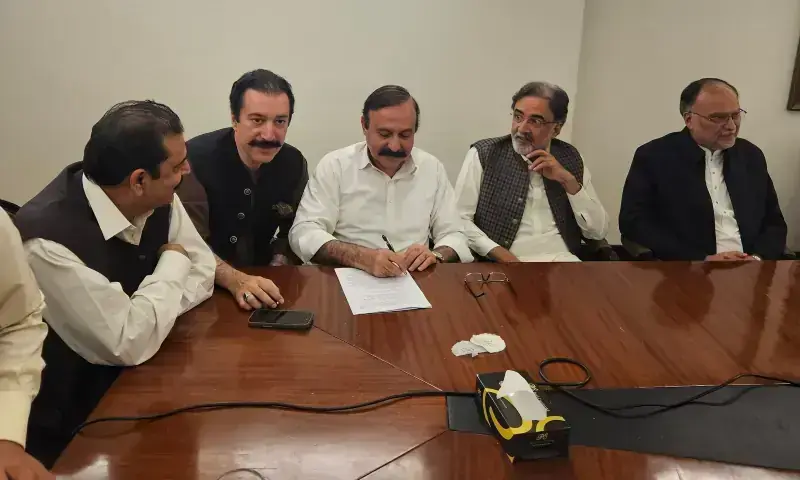
 JAAC Maintains June 9 Strike Call After Extended Talks Fail to Resolve Refugee Seats Dispute
KillBait - News highlights delivered clearly and responsibly—no clickbait, no sensationalism
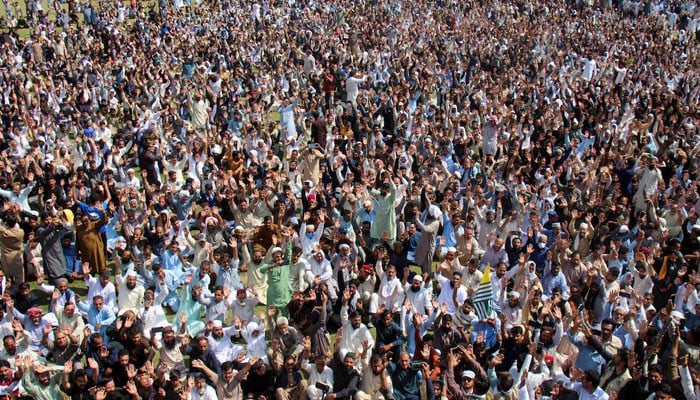
Photo: geo.tv
2026-06-06 10:37 Politics 10 


AJK government bans JAAC under Anti-Terrorism Act and adds it to First Schedule amid planned protests
The Azad Jammu and Kashmir (AJK) government has formally declared the Jammu Kashmir Joint Awami Action Committee (JAAC) as a proscribed organisation under the Anti-Terrorism Act, 2014.
According to a notification issued by the AJK Home Department, the group—also known as JAAC or Awami Action Committee—has been placed in the First Schedule of the Act following approval from the AJK president.
The government has accused JAAC of engaging in activities that threaten peace and security, including allegations of promoting unrest, creating anarchy, and spreading fear among the public.The notification further states that the organisation is involved in intimidating citizens and contributing to instability in the region.
The decision comes shortly after JAAC announced a protest call scheduled for June 9, focusing on its demand to abolish 12 legislative assembly seats reserved for refugees from Indian Illegally Occupied Jammu and Kashmir who migrated to Pakistan after 1947.These seats have become a major political point of contention in the region.
In anticipation of possible unrest, the AJK government also issued a travel advisory, urging tourists to avoid visiting the region between June 5 and June 20 and recommending that current visitors leave by Saturday evening.
The group has previously led large-scale protests over economic and political grievances, some of which reportedly turned violent in earlier years, resulting in casualties during clashes with law enforcement in 2024 and 2025.
Meanwhile, political stakeholders, including an All Parties Conference and the AJK Legislative Assembly, have recently rejected demands to abolish the reserved refugee seats, stating that such constitutional matters fall under the authority of elected representatives.The Election Commission has also announced that general elections in AJK will be held on July 27, 2026, with nomination processes beginning in June.
The situation reflects rising political tensions in the region ahead of the upcoming election cycle, with concerns about law and order and competing political demands shaping the current landscape.
2186
Original title: AJK govt declares JAAC banned outfit under anti-terrorism law
The AI system has determined that this news is not clickbait/sensationalist: : The original title is factual and descriptive, clearly stating the government action and legal status of JAAC without exaggerated language or sensational framing, so it is not clickbait. This has coincided with the opinion of the majority of users.
You may also be interested in...
JAAC Maintains June 9 Strike Call After Extended Talks Fail to Resolve Refugee Seats Dispute
 Supreme Judicial Council dismisses PTI petition challenging CEC
 Bilawal stresses protection of Gilgit-Baltistan’s rights ahead of elections