
 Type Ia Supernovae as Standard Candles in Cosmology
KillBait - News highlights delivered clearly and responsibly—no clickbait, no sensationalism
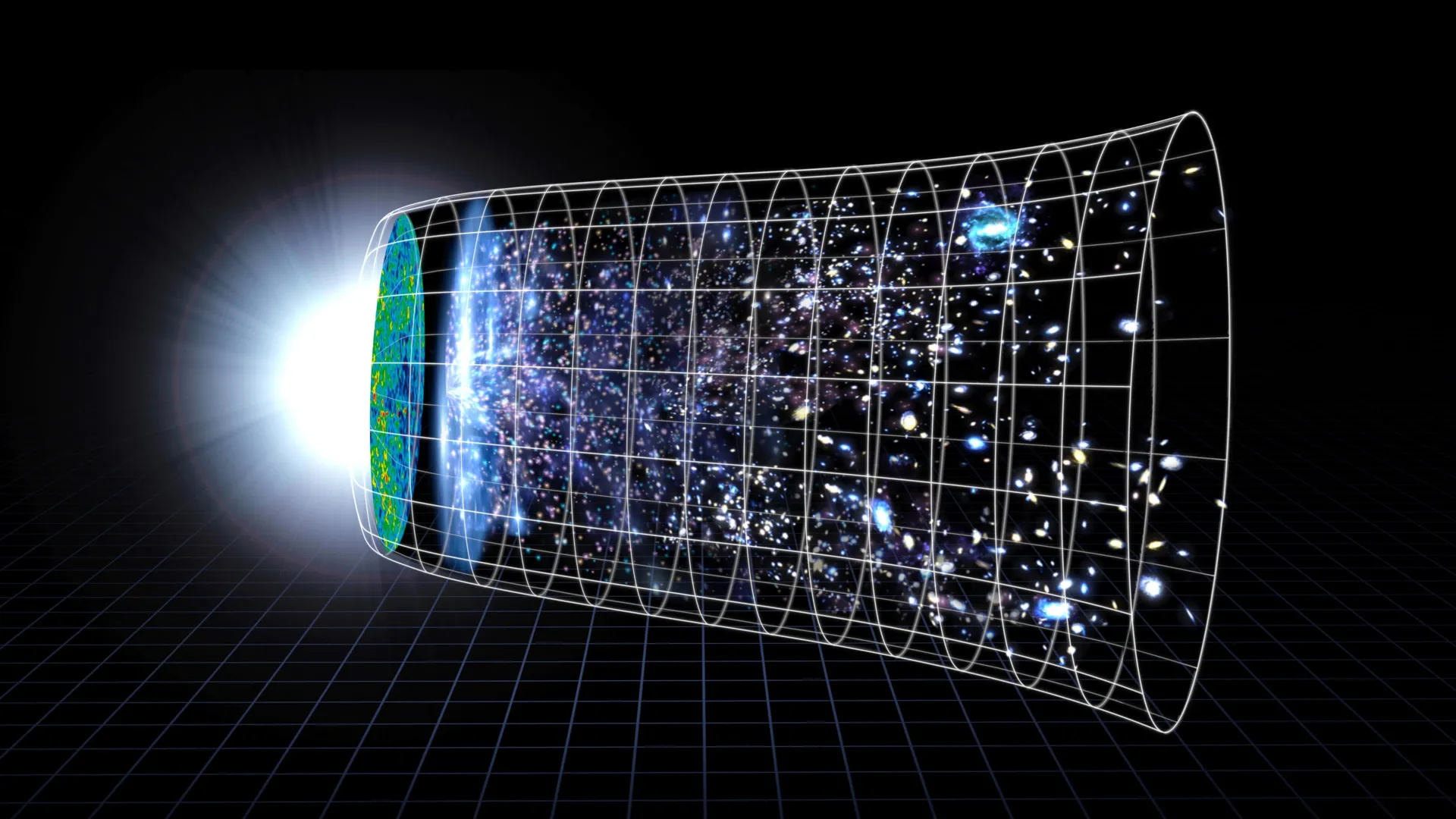
Photo: ScienceDaily
2026-07-26 03:30 Astronomy 10


Cosmic Expansion Allows Galaxies to Move Faster Than Light Without Violating Einstein's Rules
The article explains how the universe's expansion allows distant galaxies to recede faster than the speed of light without violating Einstein's theory of relativity.Cosmic expansion causes space itself to stretch, enabling galaxies to move apart at velocities exceeding light speed.This phenomenon occurs because the expansion of space is not limited by the local speed of light restriction.Light from distant galaxies takes billions of years to reach us, and during this time, the universe continues to expand.The observable universe's edge, known as the particle horizon, is about 45 billion light-years away, despite the universe being only 13.77 billion years old.Dark energy accelerates this expansion, eventually pushing galaxies beyond our Local Group out of sight.In about 100 billion years, the universe will appear almost empty as light from distant galaxies becomes stretched beyond detectable wavelengths.
The article emphasizes that while galaxies may recede faster than light, this does not violate relativity because the expansion of space itself is not constrained by the speed of light.
The Hubble distance marks the point where galaxies begin receding faster than light, while the cosmological event horizon defines the ultimate limit of observable light.These concepts highlight the complex interplay between cosmic expansion, dark energy, and the observable universe's future evolution.
2186
Original title: The Universe can outrun light without breaking Einstein’s rules
The AI system has determined that this news is clickbait/sensationalist: : The original title uses sensational phrasing like 'outrun light' and 'without breaking Einstein’s rules,' which exaggerates the scientific explanation to attract attention rather than presenting a neutral summary. This has coincided with the opinion of the majority of users.
You may also be interested in...
Type Ia Supernovae as Standard Candles in Cosmology
 Astronomers Discover First Stellar-Mass Black Hole in Omega Centauri Cluster
 Why Neptune Has the Fastest Winds in the Solar System