
 Three Road Accidents in Uttarakhand's Kumaon Region Result in Four Deaths and Two Injuries
KillBait - News highlights delivered clearly and responsibly—no clickbait, no sensationalism
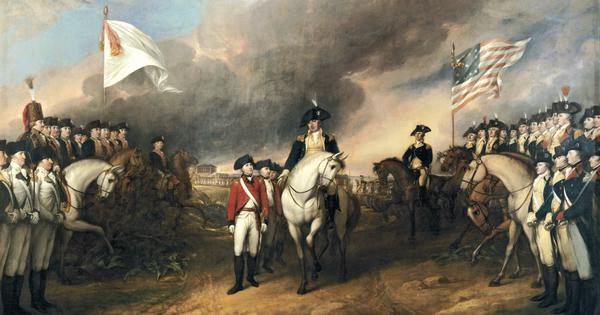
Photo: Scroll.in
2026-07-04 05:57 History 10 


India’s role in shaping British strategy during the American War of Independence
The article explores the surprising and often overlooked role that events in colonial India played in shaping the outcome of the American War of Independence.
It argues that military and economic developments involving the British East India Company in India indirectly influenced Britain’s capacity to fight the American colonies.One key event highlighted is the Second Anglo-Mysore War, particularly Hyder Ali’s victory at the Battle of Pollilur in 1780.This defeat severely weakened the East India Company’s forces and alarmed British authorities about French influence in India.
As a result, Britain reportedly increased troop deployments to India, which reduced the number of soldiers available in North America during the Revolutionary War.
The article also traces earlier economic and moral influences stemming from India, especially the Bengal famine of 1770 following the East India Company’s expansion after the Battle of Plassey in 1757.The famine, worsened by taxation policies, grain hoarding, and administrative neglect, led to massive mortality.Reports of these atrocities circulated widely in the American colonies through newspapers and pamphlets, fuelling anti-British sentiment.
Influential thinkers like John Dickinson, Jonathan Shipley, and Thomas Paine referenced the Company’s actions in India to criticise British rule, warning that similar exploitation could occur in America.
The piece further notes that British strategic overextension—balancing wars in India and America—contributed to their eventual defeat at Yorktown in 1781.The combined Franco-American forces outnumbered British troops, leading to General Cornwallis’s surrender.The article also mentions symbolic gestures, such as colonial leaders reportedly toasting Hyder Ali for weakening British forces.
Overall, it presents a broader geopolitical interpretation of the American Revolution, suggesting that colonial India and its crises played a significant, indirect role in shaping the emergence of the United States.
2187
Original title: How India influenced the US rebellion against the British 250 years ago
The AI system has determined that this news is not clickbait/sensationalist: : The title is descriptive and accurately reflects the article’s argument about India’s indirect influence on the American rebellion, without sensational exaggeration or misleading claims. This has coincided with the opinion of the majority of users.
You may also be interested in...
Three Road Accidents in Uttarakhand's Kumaon Region Result in Four Deaths and Two Injuries
 Egypt Advances in FIFA World Cup 2026 with Penalty Shootout Victory
 Gujarat ATS arrests eight in Jaish-e-Mohammed terror conspiracy case