
 ANC Women’s League set to remove Sisisi Tolashe following Integrity Commission findings
KillBait - News highlights delivered clearly and responsibly—no clickbait, no sensationalism
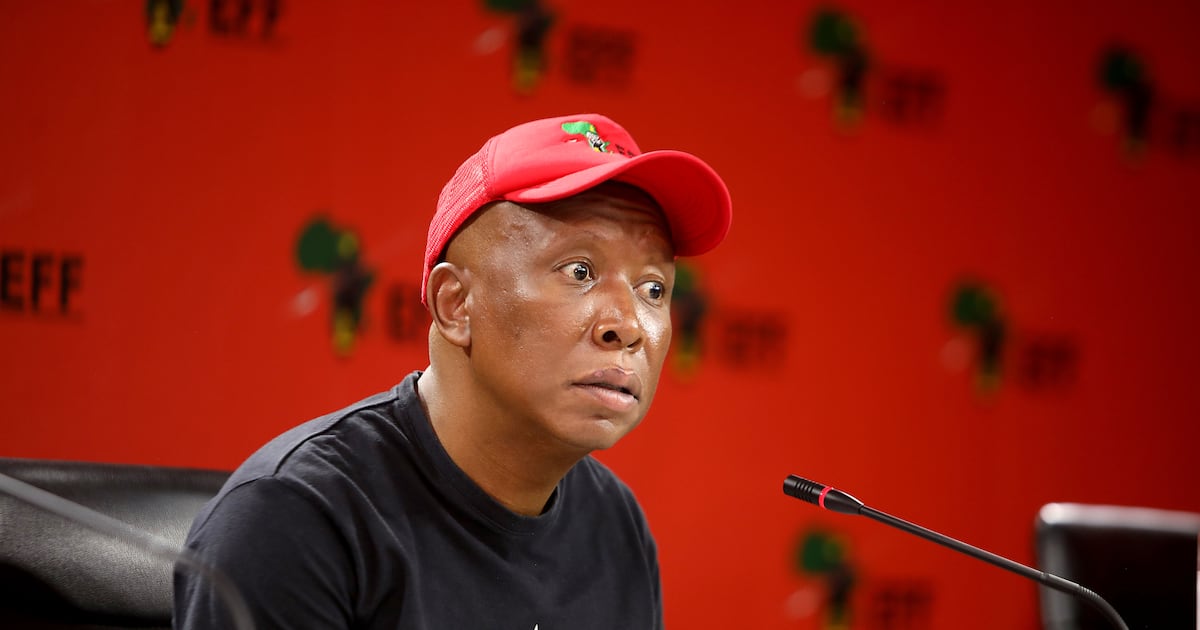
Photo: TimesLIVE
2026-05-29 16:50 Politics 10 


Malema rejects blaming African migrants for South Africa’s unemployment and service delivery crisis
Economic Freedom Fighters (EFF) leader Julius Malema has strongly pushed back against growing anti-immigrant sentiment in South Africa, arguing that poor African migrants are being unfairly blamed for deep structural problems such as unemployment, inequality, and the collapse of public services.
Speaking at a conference of left-leaning political organisations hosted by the South African Communist Party (SACP), Malema said that migrants from countries such as Zimbabwe, Mozambique, Nigeria, and Somalia are not responsible for the country’s economic challenges.
Instead, he argued that these problems stem from historical injustices, including unequal land ownership, concentrated industrial control, and an economic system that has failed to absorb labour effectively.
Malema emphasised that migrants did not privatise state capacity or design the current economic structure, and criticised what he described as attempts to redirect public anger away from systemic economic forces and towards vulnerable African communities.
He warned that Afrophobia in South Africa represents a dangerous form of false consciousness within the working class, which ultimately weakens unity among African people.
He also linked his argument to broader Pan-African and socialist ideas, calling for stronger continental solidarity and left-wing unity in the face of global capitalism.According to Malema, international capital is highly coordinated across borders, while progressive movements remain fragmented by internal divisions.He argued that this imbalance undermines efforts to achieve meaningful economic transformation in post-colonial African states.
Drawing on the ideas of Frantz Fanon, Malema said colonial and capitalist systems continue to shape both economic realities and social consciousness, encouraging competition among marginalised groups instead of collective resistance.
He further stated that Africa remains positioned in the global economy primarily as a supplier of cheap labour and raw materials, while political independence has not necessarily translated into economic power for the majority of citizens.
The conference continues at Birchwood Hotel and Conference Centre, where various political formations are expected to deliberate on resolutions aimed at strengthening left unity and addressing challenges facing working-class communities across the continent.
2186
Original title: Poor Africans not responsible for unemployment, collapsing public services, says Malema
The AI system has determined that this news is not clickbait/sensationalist: : The headline is direct and reflects the core statement attributed to Malema without exaggeration or sensational framing. It does not use misleading hooks or distort the content, so it is not considered clickbait. This has coincided with the opinion of the majority of users.
You may also be interested in...
ANC Women’s League set to remove Sisisi Tolashe following Integrity Commission findings
 DA rejects eThekwini municipality’s revised tariff proposals for 2026/27 financial year
 eThekwini CFO Clarifies Wife’s Role and Employment Process