
 NASA Unveils Multi-Phase Plan for Lunar South Pole Base
KillBait - News highlights delivered clearly and responsibly—no clickbait, no sensationalism
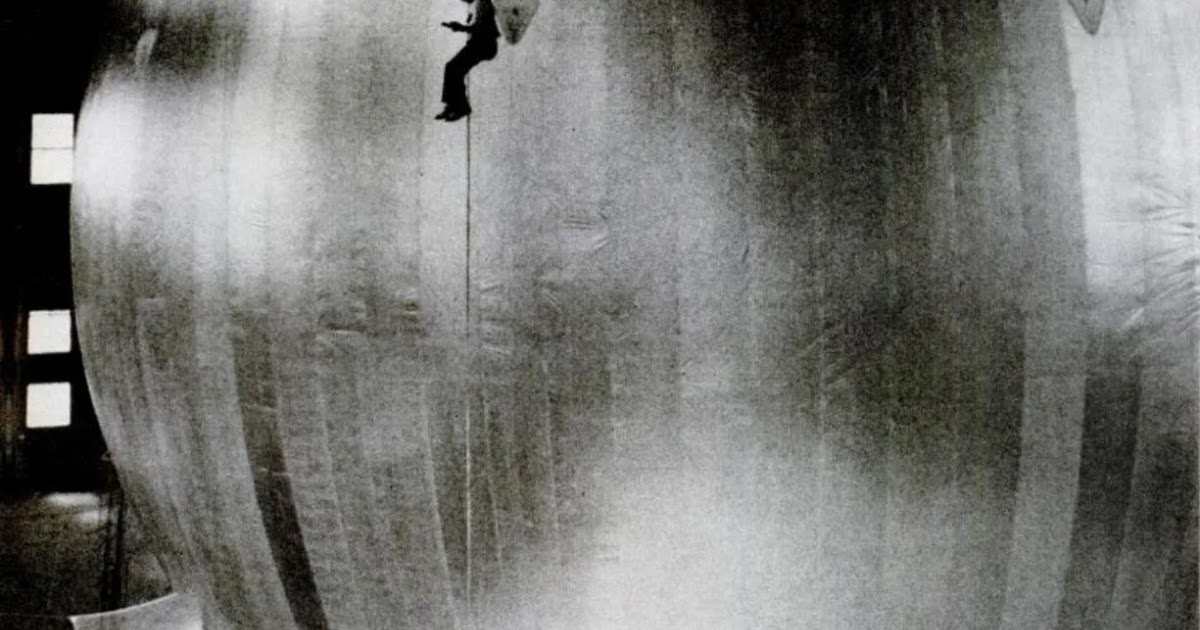
Photo: vintag.es
2026-05-23 09:16 Science 28 


NASA Technician Inspects Echo II Satellite Using Tethered Balloon, 1963
In 1963, a NASA technician conducted a unique manual inspection of the Echo II communications satellite inside a hangar at Lakehurst, New Jersey.The satellite, a massive 135-foot-diameter Mylar balloon, was highly reflective and designed to passively relay radio signals back to Earth by reflecting them.
To ensure the balloon’s surface was free from leaks or flaws, the technician floated up and down alongside it using a small personal balloon tethered to the ground.The Echo satellite program marked a pioneering step in space communications.
Unlike modern satellites, Echo I and II carried no electronic instruments; instead, signals sent from Earth were simply bounced off their reflective surfaces to other ground stations.Echo I, launched in 1960, successfully transmitted the first transcontinental voice message, including one from President Dwight Eisenhower.
Echo II, launched in 1964, was larger and used for both scientific experiments and international signal reflections, including cooperation between the U.S.and the Soviet Union.The program provided key insights into satellite tracking, atmospheric drag, and temperature control in orbit.Additionally, technology developed for Echo contributed to discoveries in cosmic microwave background radiation, supporting the Big Bang theory.Overall, the Echo program laid the foundation for modern satellite communications and represented a significant milestone in space technology.
2404
Original title: Technician Floating Up and Down to Inspect Echo II, a NASA Satellite, 1963
The AI system has determined that this news is not clickbait/sensationalist: : The original title accurately describes the main event without exaggeration or sensationalism. This has coincided with the opinion of the majority of users.
Comments :
You may also be interested in...
NASA Unveils Multi-Phase Plan for Lunar South Pole Base
 NASA Outlines Phased Plan to Establish a Lunar Base at the Moon’s South Pole
 NASA To Open JPL Management Contract To Competition After Decades Under Caltech
#1 pandaferret
Back in ’63 NASA had technicians floating up beside a giant balloon satellite to check for leaks. Hard to imagine that level of hands-on work today with all the bureaucracy. Echo II was a reflective bag bouncing signals around the world and helped space communication.