
 NASA ends MAVEN mission after spacecraft failure, concluding key Mars atmospheric loss research
KillBait - News highlights delivered clearly and responsibly—no clickbait, no sensationalism
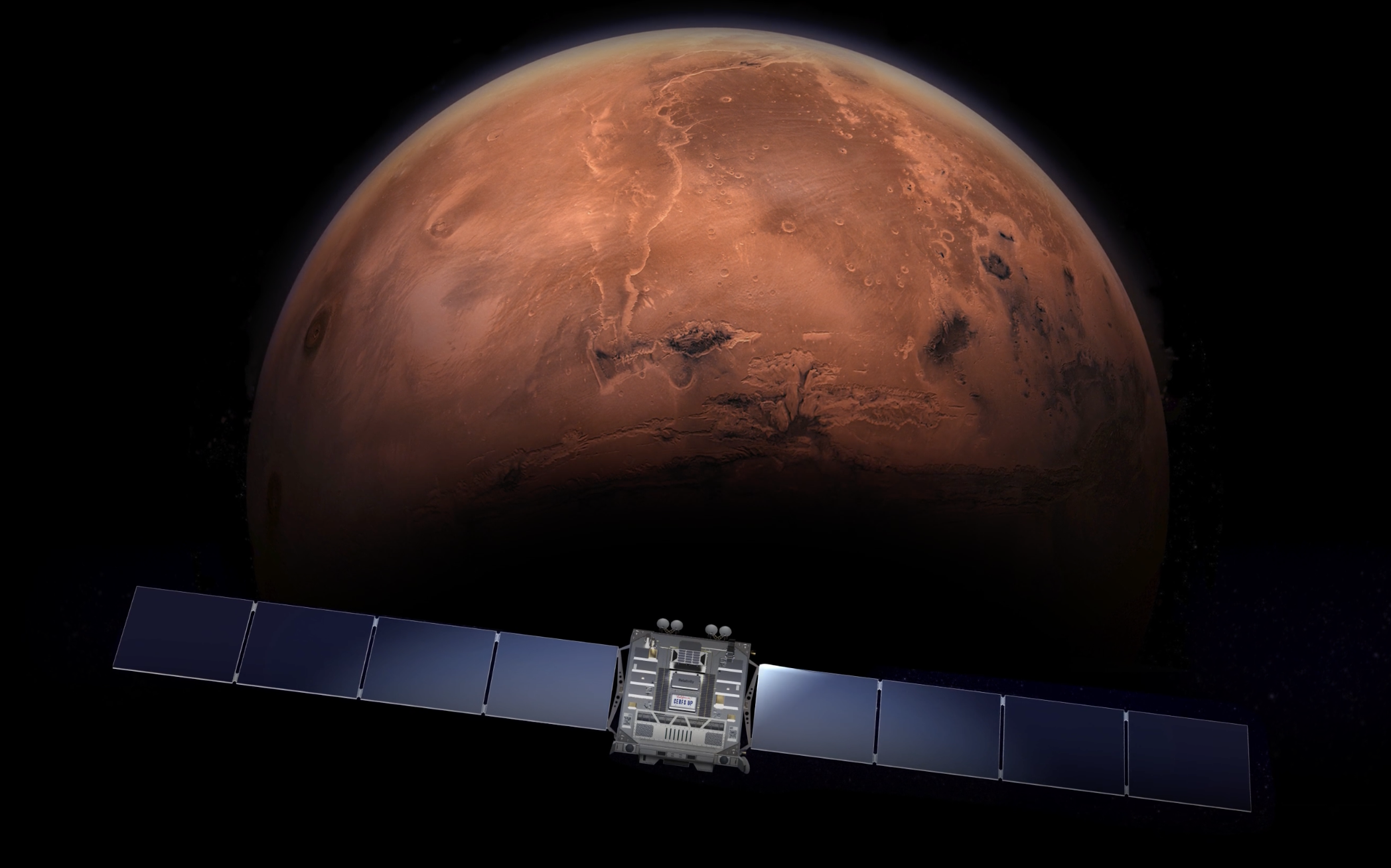
Photo: Eureka
2026-06-20 00:05 Astronomy 12 


Relativity Space Plans Private Mars Orbiter with NASA Scientific Instruments for 2028 Launch
Relativity Space, a U.S.aerospace company best known for developing the Terran R launch vehicle scheduled for debut around 2027, has announced an unexpected plan to send a Mars orbiter in 2028.
The company, which has recently stabilized financially following acquisition by former Google CEO Eric Schmidt, is positioning this mission as the first in a broader series of scientific spacecraft developed in collaboration with philanthropic organizations.The planned Mars orbiter does not yet have an official name, but its scientific payload will be provided by NASA.
The mission includes a radar instrument designed to measure the thickness and properties of subsurface ice deposits on Mars, as well as a suite of atmospheric instruments known as Aeolus, supplied by NASA’s Ames Research Center.Aeolus is intended to study Martian winds and their role in transporting dust, water vapor, carbon dioxide, and other atmospheric gases.
It will combine a wide-field camera, a radiometer to measure surface-emitted radiation, and several spectrometers aimed at observing the planet’s limb to derive wind profiles.
The Aeolus instrument concept has historical roots in a previously proposed standalone mission that would have flown as a secondary payload alongside the canceled NeMO (Next Mars Orbiter).That earlier design included instruments such as the SuRSeP radiometer, TLS infrared limb sounder, and SHS spectrometers.The current configuration is expected to be similar but adapted for integration into Relativity Space’s platform.
The inclusion of a radar system for ice mapping suggests possible heritage from NASA’s International Mars Ice Mapper (I-MIM) concept, although international collaboration for that mission remains uncertain due to shifting priorities, including cost overruns and the effective cancellation of the Mars Sample Return program.These developments have impacted several planned planetary missions, leaving projects like I-MIM in limbo.Relativity Space has not released detailed technical specifications for the orbiter, but it is expected to launch using the Terran R rocket.
The announcement highlights growing interest in privately led deep space missions supported by NASA instruments, signaling a potential shift in how Mars exploration missions are developed and funded.
2224
Original title: La sonda marciana de Relativity Space
The AI system has determined that this news is not clickbait/sensationalist: : The original title is descriptive and directly states the subject of the article (Relativity Space and a Mars probe). It does not use sensational language or attempt to mislead the reader. This has coincided with the opinion of the majority of users.
You may also be interested in...
NASA ends MAVEN mission after spacecraft failure, concluding key Mars atmospheric loss research
 Russia May Permanently Seal the Leaking Zvezda Transfer Compartment on the ISS to Reduce Risk
 Ariane 6 Debuts More Powerful P160C Boosters on Amazon Leo Satellite Mission