
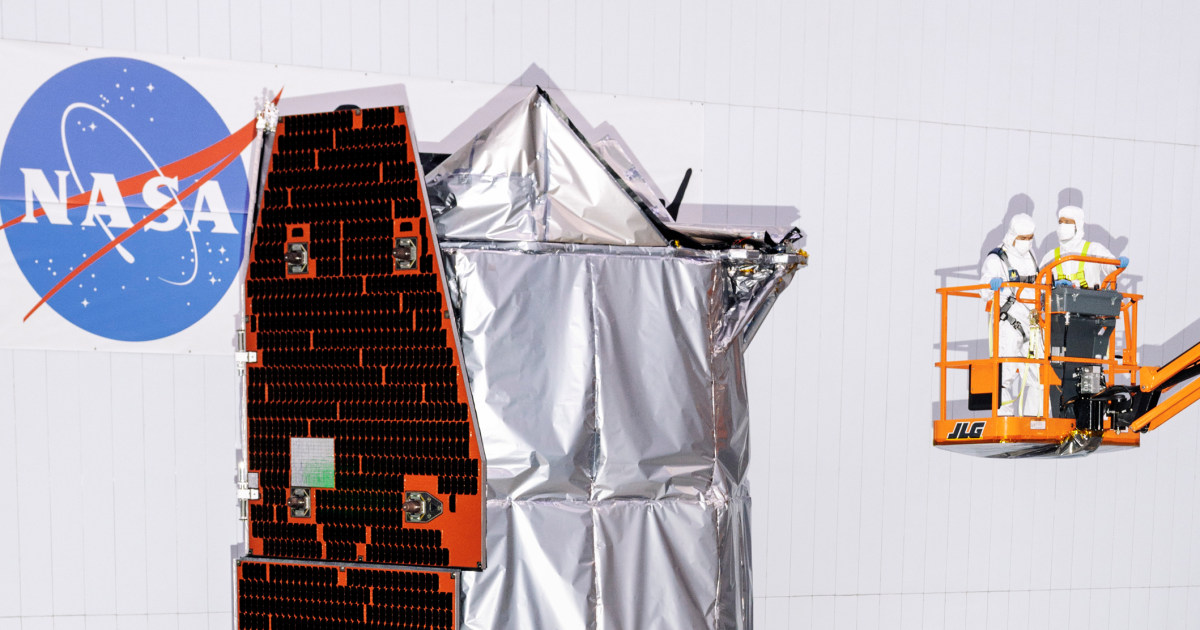
 NASA’s Nancy Grace Roman Space Telescope Nears August Launch to Map the Universe and Study Dark Energy
KillBait - News highlights delivered clearly and responsibly—no clickbait, no sensationalism
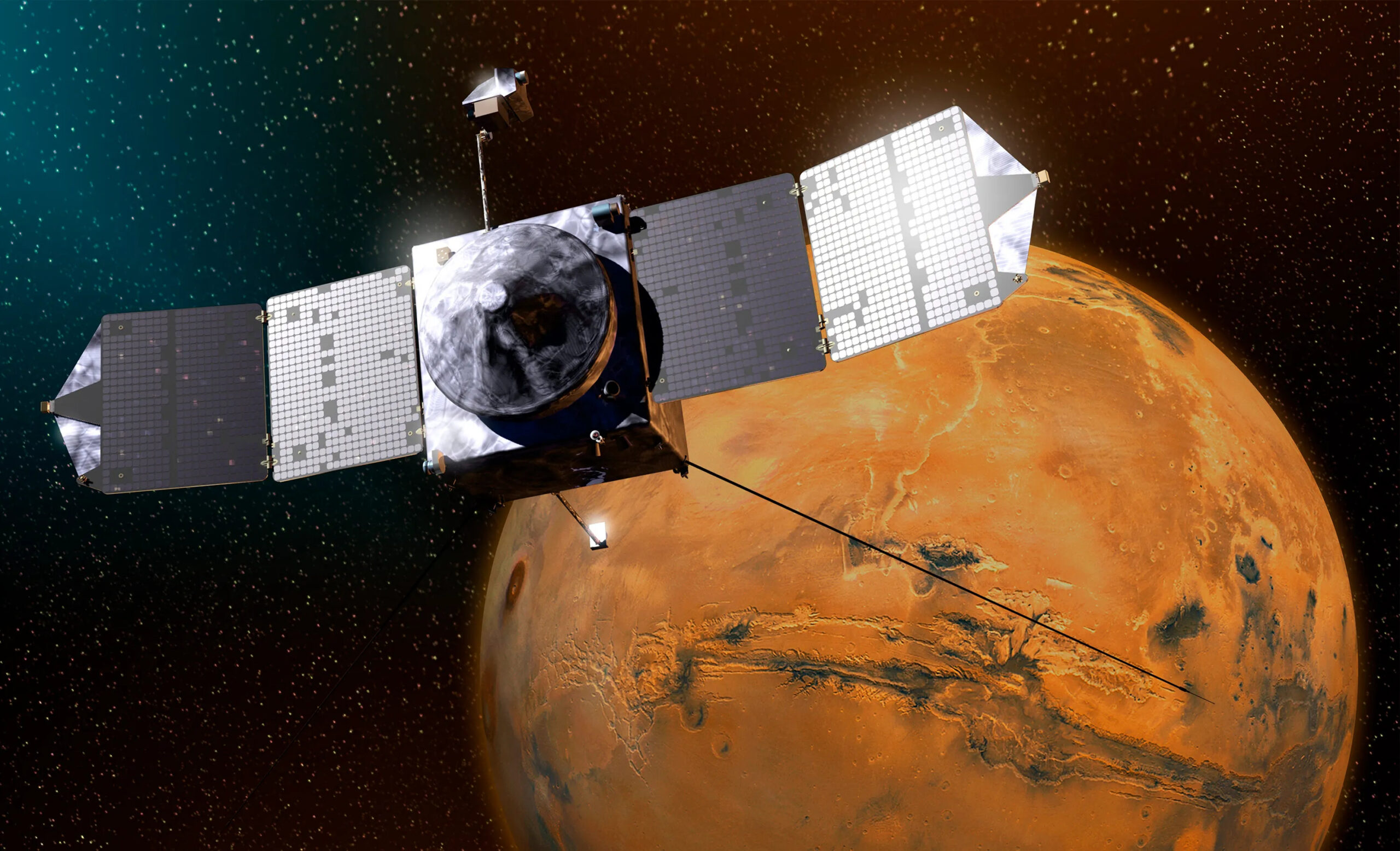
Photo: Eureka
2026-06-18 00:25 Astronomy 13 


NASA ends MAVEN mission after spacecraft failure, concluding key Mars atmospheric loss research
The NASA MAVEN mission to Mars has officially ended after more than a decade of operations, following the loss of contact with the spacecraft on December 6, 2025.
Although attempts were made to reestablish communication in late 2025 and early 2026, including visual checks using the Curiosity rover’s Mastcam, the spacecraft could not be detected or contacted.A review committee concluded that MAVEN likely suffered a loss of attitude control, causing it to spin uncontrollably.This rapid rotation would have prevented its solar panels from properly charging the batteries, ultimately leading to a complete power failure.
Engineers also suspect that a possible orbital disturbance or even a physical event, such as venting or fragmentation, may have contributed, though no definitive cause has been confirmed.Repeated issues with the spacecraft’s inertial measurement units over the years may have played a role in the failure.
Launched in November 2013 and inserted into Martian orbit in September 2014, MAVEN’s primary goal was to study how the solar wind interacts with Mars and how the planet gradually loses its atmosphere due to the absence of a global magnetic field.
The mission successfully mapped key atmospheric escape processes, including ion loss through polar and equatorial regions, sputtering caused by solar wind particles, and thermal escape of hydrogen.
MAVEN also helped quantify that Mars currently loses only a few kilograms of atmosphere per day, but that in the distant past, when the atmosphere was much denser, loss rates were significantly higher.The data supports the conclusion that Mars has lost the equivalent of one to two full carbon dioxide atmospheres over its history.
Beyond its science mission, MAVEN served as a critical communications relay for surface assets such as Curiosity, InSight, and Perseverance, transmitting a large portion of Martian data back to Earth.
With its premature end, NASA loses an essential part of its Mars communications network and will need to accelerate plans for future relay infrastructure.
2249
Original title: Adiós a la sonda MAVEN, la misión que nos enseñó cómo desapareció la atmósfera de Marte
The AI system has determined that this news is not clickbait/sensationalist: : The original title is descriptive and factual, clearly summarizing the subject (the MAVEN mission and its scientific significance) without exaggeration or sensational language, so it is not clickbait. This has coincided with the opinion of the majority of users.
Comments :
You may also be interested in...
NASA’s Nancy Grace Roman Space Telescope Nears August Launch to Map the Universe and Study Dark Energy
 Waxing Crescent Moon Visible on June 16 With 7% Illumination After the New Moon
 Japan Successfully Launches the First H3-30 Rocket Variant on Test Mission Carrying Six Small Satellites
#1 greenloki
Typical government waste. A decade and millions spent to figure out Mars lost its atmosphere? We already knew that! Probably just another case of woke engineering – couldn't handle a little solar radiation. Now they gotta scramble for another relay. It's always something.