
 Scientists Identify Possible Causes of the Global Hum Phenomenon
KillBait - News highlights delivered clearly and responsibly—no clickbait, no sensationalism

Photo: ScienceDaily
2026-07-20 00:59 Science 10


Scientists Recreate Cosmic Dust to Study Life's Origins
Researchers at the University of Sydney have recreated cosmic dust in a laboratory setting, offering new insights into how life's essential chemical ingredients may have formed in space.
PhD candidate Linda Losurdo simulated space-like conditions by combining nitrogen, carbon dioxide, and acetylene, then subjected the gases to an electrical charge to create carbon-rich dust resembling material found in comets, asteroids, and meteorites.
The lab-made dust contains CHON molecules (carbon, hydrogen, oxygen, nitrogen) critical to organic life and produces infrared signals matching those observed in space.This breakthrough allows scientists to study the chemical processes that could have delivered life's building blocks to Earth.
The experiment, published in The Astrophysical Journal, mimics the extreme conditions of interstellar space where cosmic dust forms through ion and electron interactions.
By analyzing these synthetic samples, researchers can better understand how complex organic structures develop in stellar environments and how they might have contributed to life's emergence on Earth.
The study also aims to create a database of infrared fingerprints for different cosmic dust types to aid astronomical observations and meteorite analysis.
2187
Original title: A tiny universe in a bottle reveals clues to the origins of life
The AI system has determined that this news is not clickbait/sensationalist: : The original title uses metaphorical language ('tiny universe in a bottle') to describe a scientific experiment, but it does not employ exaggerated claims or sensationalist phrasing common in clickbait headlines. This has coincided with the opinion of the majority of users.
You may also be interested in...
Scientists Identify Possible Causes of the Global Hum Phenomenon
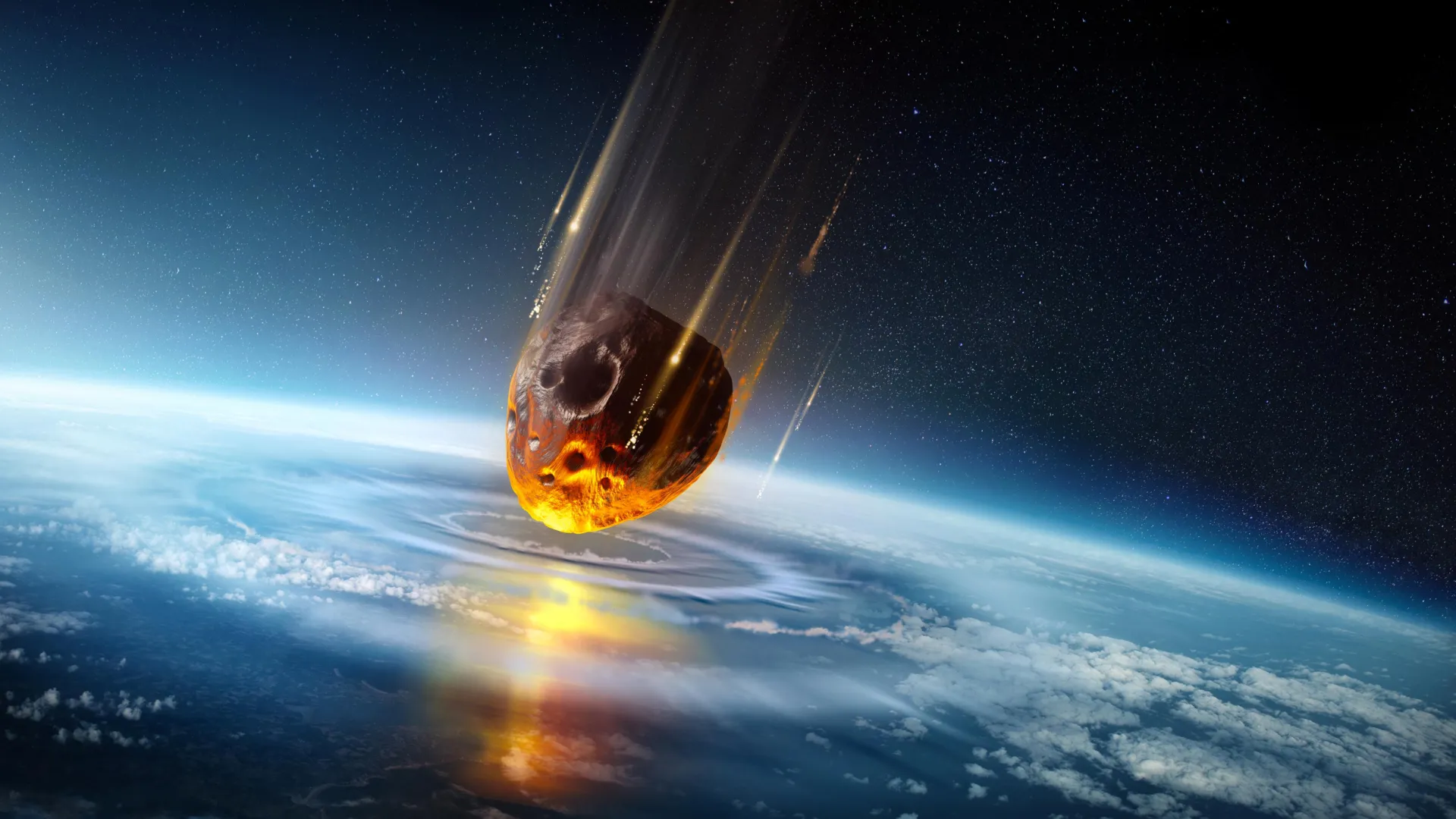 Rare Meteorite Linked to Dinosaur Extinction Revealed by New Research
 NASA's New Horizons Probe Resumes Science Operations in the Kuiper Belt After Hibernation