
 Supreme Court orders review of Mississippi death row conviction over alleged jury selection racial bias
KillBait - News highlights delivered clearly and responsibly—no clickbait, no sensationalism
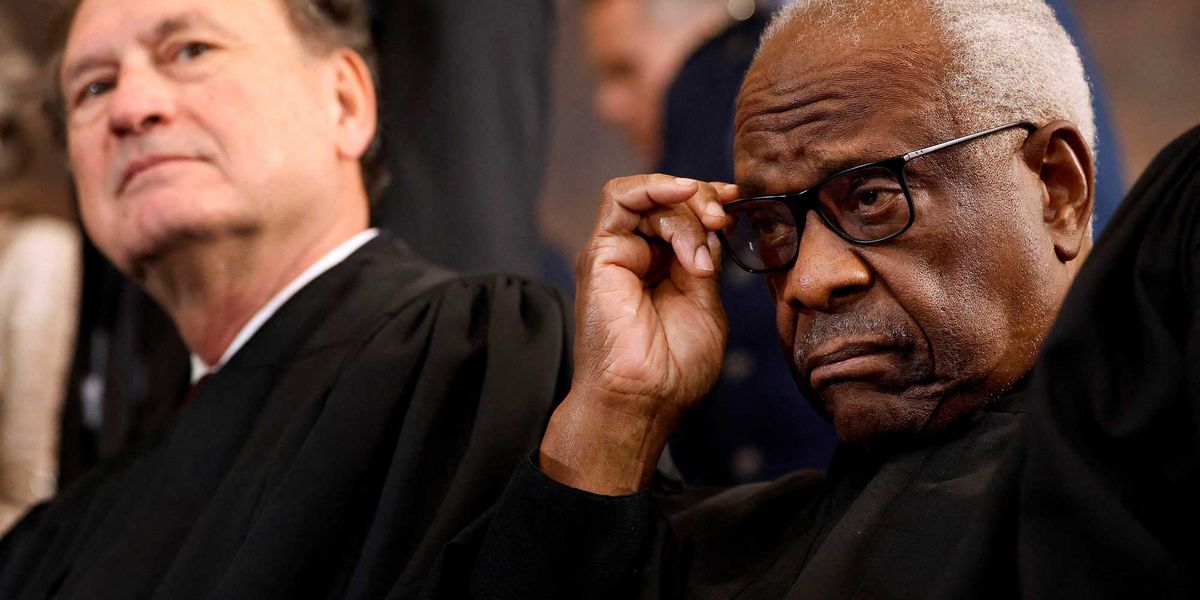
Photo: Raw Story - Celebrating 20 Years of Independent Journalism
2026-05-23 21:24 Justice 32 


Supreme Court Conservatives Decline to Join Clarence Thomas in Challenging Protections for Intellectually Disabled Death Row Inmates
A recent dissent by Supreme Court Justice Clarence Thomas in the Alabama death penalty case Hamm v.Smith revealed divisions within the court’s conservative majority regarding constitutional protections for intellectually disabled inmates facing execution.Thomas argued that the Supreme Court should overturn the 2002 Atkins v.
Virginia decision, which ruled that executing people with intellectual disabilities violates the Eighth Amendment’s ban on cruel and unusual punishment.
In his opinion, Thomas claimed there is no historical basis for prohibiting such executions and asserted that constitutional protections should return to what he described as their “fixed meaning.
” According to reporting highlighted by Slate writers Dahlia Lithwick and Mark Joseph Stern, Thomas’s position was considered too extreme even for several conservative colleagues.Chief Justice John Roberts and Justices Samuel Alito and Neil Gorsuch declined to join his dissent.
Although those justices indicated some openness to reconsidering how courts determine intellectual disability in death penalty cases, they stopped short of endorsing Thomas’s call to eliminate the protections entirely.
The article also noted that Justices Brett Kavanaugh and Amy Coney Barrett did not support the separate position advanced by Roberts, Alito, and Gorsuch, which suggested the court could revisit the broader legal framework if states presented stronger legal arguments in future cases.Legal commentators viewed this as both a sign of restraint and a warning that future challenges to Atkins v.Virginia may still emerge.
The report frames the disagreement as evidence of ideological and strategic tensions within the conservative bloc of the Supreme Court over the future of death penalty jurisprudence and constitutional protections for people with cognitive disabilities.
Full reading at Raw Story - Celebrating 20 Years of Independent Journalism
2428
Original title: Conservative justices distanced themselves from Clarence Thomas death penalty opinion
The AI system has determined that this news is not clickbait/sensationalist: : The original title accurately reflects the main development discussed in the article and does not rely on exaggerated or misleading language to attract attention. This has coincided with the opinion of the majority of users.
You may also be interested in...
Supreme Court orders review of Mississippi death row conviction over alleged jury selection racial bias
 Supreme Court clarifies Batson jury selection standards in Mississippi racial bias case
 Clarence Thomas dissent criticized after Supreme Court rejects Florida interstate lawsuit over driver’s licenses