
 Tanzania 2026/27 Works Budget and Economic Performance Update: Mining, Dividends, Investment and Infrastructure Expansion
KillBait - News highlights delivered clearly and responsibly—no clickbait, no sensationalism

Photo: The Citizen
2026-07-03 09:48 Economy 10 


Tanzania Revenue Authority marks 30 years of growth, digital transformation and expanding tax base
The Tanzania Revenue Authority (TRA) has marked 30 years since its establishment, reflecting a major transformation in the country’s tax administration and revenue collection systems.
When it started in 1996, TRA was collecting about Sh207 billion annually from around 70,000 taxpayers, relying heavily on manual systems and limited records.Today, the institution has grown into a modern revenue giant, collecting close to Sh38 trillion per year and managing a taxpayer base of more than 8.1 million people and businesses.
This progress has been driven largely by reforms in digital taxation, including electronic tax payment systems, online registration, and improved customs platforms.
TRA leadership notes that these innovations have significantly improved efficiency and compliance, allowing the authority to exceed its revenue targets for 24 consecutive months.
The institution has also expanded its physical presence across the country, increasing offices from 95 to 323 and growing its workforce to improve service delivery and enforcement.
Government leaders, including President Samia Suluhu Hassan, have emphasized that domestic revenue mobilisation is key to Tanzania’s economic independence, especially as global aid declines and borrowing becomes more expensive.
Experts also highlight that the main success factor is the expansion of the tax base through formalisation of economic activities rather than simply increasing tax rates.
Despite these achievements, challenges remain, particularly the large informal sector and the rise of digital commerce, which require more advanced tax systems.TRA’s future strategy focuses on strengthening digital infrastructure, fighting smuggling and illicit trade, and widening the tax base further.
The institution’s next phase aligns with Tanzania’s Vision 2050, which aims for a stronger, more self-reliant, and industrialised economy supported by sustainable domestic revenue generation.
2195
Original title: TRA at 30: How Tanzania built a giant — and what comes next
The AI system has determined that this news is not clickbait/sensationalist: : The original title is descriptive and factual, clearly summarising the subject of TRA's 30-year milestone and future outlook without sensational language or exaggeration. This has coincided with the opinion of the majority of users.
You may also be interested in...
Tanzania 2026/27 Works Budget and Economic Performance Update: Mining, Dividends, Investment and Infrastructure Expansion
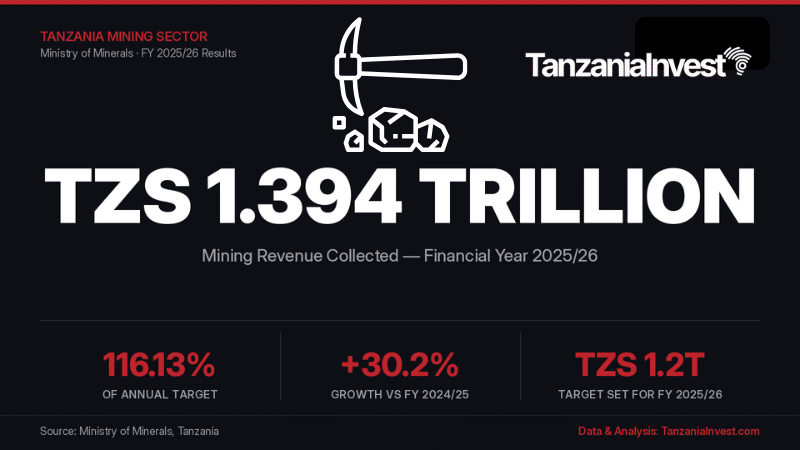 Tanzania mining revenue reaches TZS 1.39 trillion in 2025/26, surpassing government target
 Four Tanzanians awarded Mexico World Cup trips through Mixx digital payments campaign