
 NAB transfers recovered assets worth Rs4.1 billion to Rawalpindi Development Authority in embezzlement case
KillBait - News highlights delivered clearly and responsibly—no clickbait, no sensationalism
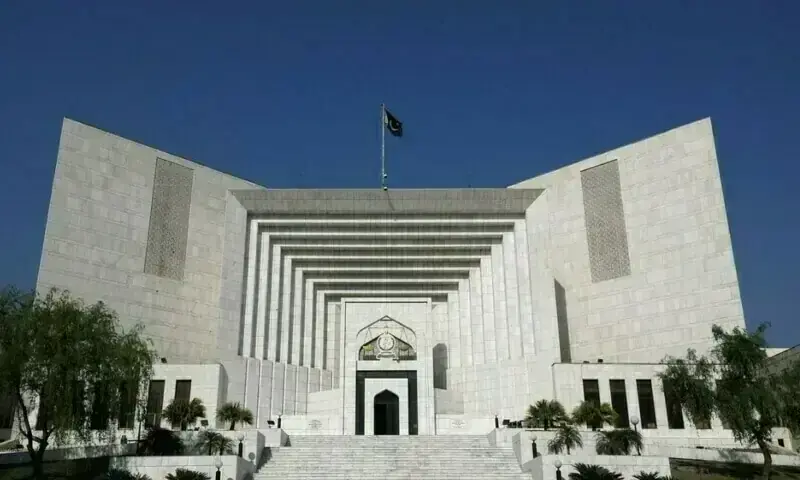
Photo: dawn.com
2026-07-02 10:19 Justice 11 


Supreme Court affirms women’s inheritance rights under Sharia and invalidates fraudulent property mutation
The Supreme Court of Pakistan has resolved a decades-old inheritance dispute by reaffirming that women’s inheritance rights are firmly protected under Sharia and the law, and cannot be denied through manipulation or informal arrangements.The case involved a property dispute dating back to 1955 after the death of a family patriarch, Roshan.
Although an inheritance mutation was initially recorded in favour of all legal heirs, a second mutation was allegedly created on the same day on the basis of a verbal gift claimed by male heirs, effectively excluding female heirs from their rightful shares.The petitioners argued that no such gift ever took place and that the second mutation was fraudulently entered to deprive women of inheritance.Over time, the property was further transferred through various exchanges and gift deeds by the male descendants.
Lower courts had previously dismissed the claim, but the Supreme Court overturned those decisions, declaring the disputed mutation illegal, void, and without legal effect.
The Court ruled that inheritance rights are vested immediately upon the death of a property holder and cannot be taken away through private agreements, cultural pressure, or manipulated revenue records.It emphasized that once a gift is challenged, the burden of proof lies on those claiming its validity.
The judgment also highlighted that women are frequently deprived of inheritance through coercion, fabricated transactions, and prolonged litigation designed to exhaust claimants.
Justice Shahid Bilal Hassan observed that protecting inheritance rights is not only a legal obligation but also a social responsibility shared by families, institutions, and society.
The Court directed revenue authorities to correct records and ensure proper distribution of shares, reinforcing that justice requires safeguarding women’s rightful inheritance as guaranteed under Islamic principles and constitutional values.
2206
Original title: Women’s inheritance rights enshrined in Sharia, Supreme Court holds
The AI system has determined that this news is not clickbait/sensationalist: : The original title is factual and descriptive, clearly stating the Supreme Court’s ruling on women’s inheritance rights without sensationalism or exaggeration. This has coincided with the opinion of the majority of users.
You may also be interested in...
NAB transfers recovered assets worth Rs4.1 billion to Rawalpindi Development Authority in embezzlement case
 Pakistan introduces cashless payment system at all passport offices nationwide
 NDMA issues nationwide alert for GLOF, flash floods and landslides during active monsoon period