
 The 1914 Peugeot Bébé and the Birth of the Early Affordable City Car
KillBait - News highlights delivered clearly and responsibly—no clickbait, no sensationalism
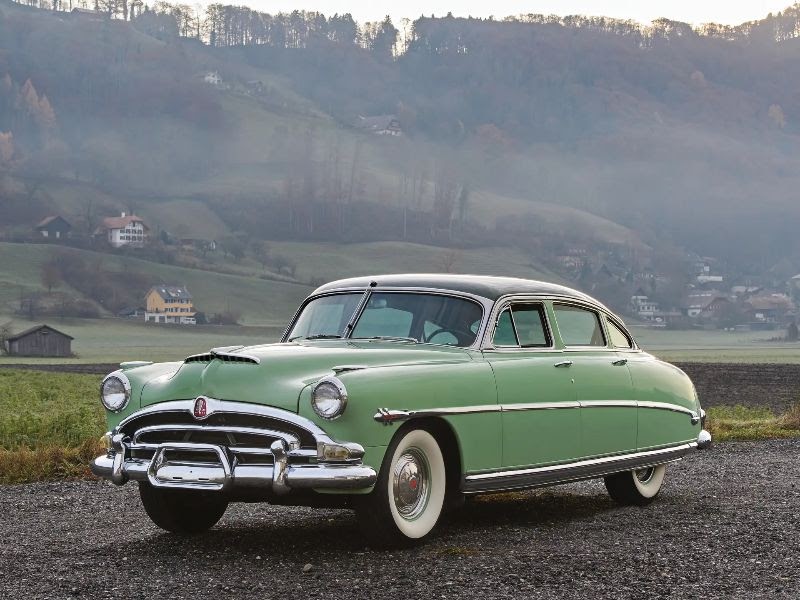
Photo: vintag.es
2026-05-25 13:49 History 27 


The 1953 Hudson Hornet Sedan and Its Legacy in Early NASCAR History
The 1953 Hudson Hornet Sedan is widely regarded as one of the most influential American automobiles of the mid-20th century, particularly due to its success in early NASCAR racing.It represented the final production year of Hudson’s innovative “step-down” design, which placed the car’s floor lower within the frame.
This engineering approach created a lower center of gravity than most competing vehicles of the era, significantly improving stability and cornering performance.As a result, the Hudson Hornet gained a major competitive advantage on race tracks dominated by heavier, less balanced cars.Powering the Hornet was the well-known 308-cubic-inch flathead six-cylinder engine equipped with the Twin H-Power system.This setup used dual carburetors and a high-compression aluminum cylinder head to boost performance and durability.The combination of this powerful engine and the advanced chassis design made the Hornet extremely competitive in stock car racing.
The vehicle’s dominance was especially evident in NASCAR Grand National competition, where Hudson models secured three consecutive championships from 1951 to 1953.This achievement earned the car the nickname “Fabulous Hudson Hornet,” solidifying its reputation as a racing icon.
However, 1953 also marked a turning point, as Hudson would soon merge into American Motors Corporation (AMC), ending the era of independent Hudson engineering innovation.Today, the 1953 Hudson Hornet Sedan remains a celebrated symbol of automotive ingenuity and early American motorsport history.
2393
Original title: The 1953 Hudson Hornet Sedan: A Racing Legend
The AI system has determined that this news is not clickbait/sensationalist: : The original title is descriptive and factual, clearly identifying the subject and its significance without sensational language or misleading phrasing. This has coincided with the opinion of the majority of users.
You may also be interested in...
The 1914 Peugeot Bébé and the Birth of the Early Affordable City Car
 Maine Community Successfully Moved a Meeting Hall Nine Miles by Sea in 1951
 Rethinking Sexuality in Prehistory: Cooperation, Social Bonds, and Evolutionary Strategy