
 Maine Community Successfully Moved a Meeting Hall Nine Miles by Sea in 1951
KillBait - News highlights delivered clearly and responsibly—no clickbait, no sensationalism
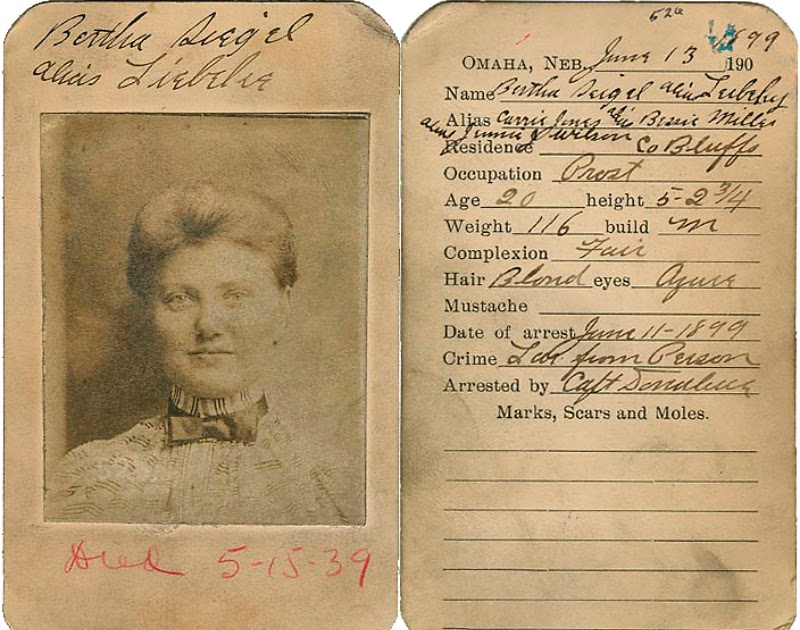
Photo: vintag.es
2026-05-24 12:11 History 32 


The Criminal Career and Life of Bertha Liebbeke, ‘Fainting Bertha,’ a Notorious Midwestern Pickpocket
The article recounts the life and criminal history of Bertha Liebbeke, also known by several aliases and widely referred to as “Fainting Bertha,” one of the most infamous pickpockets in the American Midwest during the late 19th and early 20th centuries.
Born in March 1880 in Council Bluffs, Iowa, Bertha experienced early tragedy with the death of her father and was later diagnosed with Sydenham’s chorea, a neurological disorder that caused involuntary movements.Due to her condition and behavior, she was institutionalized in multiple facilities, including hospitals for the mentally ill in Iowa.After her release, Bertha reportedly entered a life of crime, claiming she was taught pickpocketing by a man named Gunther.
She became known for a unique method of theft in which she would pretend to faint in public, attracting sympathetic men who would catch her—only to have their wallets, jewelry, or valuables stolen in the process.
This tactic earned her the nickname “Fainting Bertha” and made her highly effective at avoiding suspicion while traveling across Midwestern cities by train and boat.Her criminal activities led to multiple arrests, convictions, and incarcerations in prisons and asylums across several states.
She frequently escaped custody and was described as having severe mental health instability, including violent outbursts, hallucinations, and suicidal behavior.Authorities struggled to determine whether she belonged in prison or psychiatric care.Despite attempts at reform, including a brief intervention by a church in Omaha, her behavior remained unstable.Over the years she accumulated multiple aliases, appeared in numerous police rogues’ galleries, and spent long periods institutionalized.
She died in 1939 at a state hospital in Nebraska at the age of 59, leaving behind a complex legacy shaped by crime, mental illness, and the penal and medical systems of her time.
2427
Original title: Mugshots of Bertha Liebbeke aka Fainting Bertha, One of the Midwest’s Most Infamous Pickpockets
The AI system has determined that this news is clickbait/sensationalist: : The title uses sensational phrasing such as “Most Infamous Pickpockets” and emphasizes mugshots and notoriety, which is designed to attract attention, though it remains grounded in a historical case. This has coincided with the opinion of the majority of users.
You may also be interested in...
Maine Community Successfully Moved a Meeting Hall Nine Miles by Sea in 1951
 The 1914 Peugeot Bébé and the Birth of the Early Affordable City Car
 Rethinking Sexuality in Prehistory: Cooperation, Social Bonds, and Evolutionary Strategy